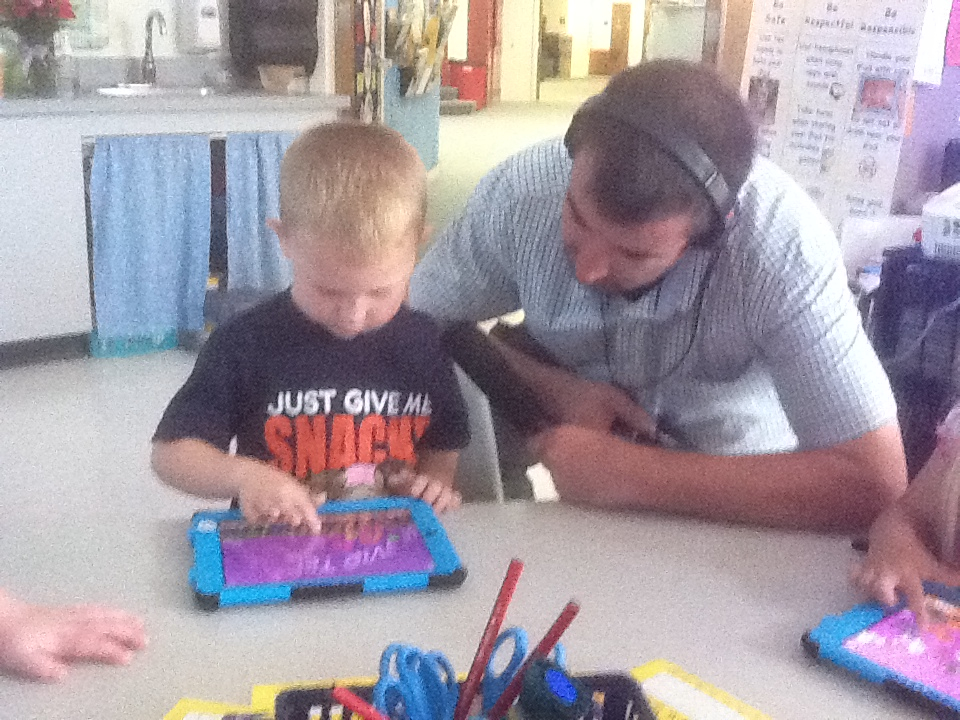
Entrepreneurial Thinking for Educators

I’ve been thinking a lot lately about entrepreneurial thinking.  Branding and Buzz is one of the “Supporting But Necessary” components to the Lead4Change model, but it is becoming clear to me that educators generally do not think entrepreneurially or about how to market their good work.  It is generally not part of their creative problem solving skill set. (Nor can I think of a single reason why they would have, up to this point. Educators generally haven’t had to live entrepreneurially, so why would they think that way? This isn’t blaming or criticism. It’s just observation.)

Not only am I thinking about how we might fund our innovative programs in schools (when we can barely get core services funded), but I know several groups of wonderful educators who put together conferences that always get the best reviews from participants, and nonetheless are facing greatly declining enrollments. We haven’t seen schools in such financial dire straights in a long time, and it doesn’t look like there will be any more money from the state or the Feds in the near future. And, just as in all perceived survival situations, all the supporting systems get shut down to keep the core systems operating… So it’s not surprising that PD is getting cut way back and conferences and institutes are struggling.  

In other words, there is a growing need for educators to think entrepreneurially.

I’ll concentrate in this post on the notion of entrepreneurial thinking when trying to put together professional development opportunities for others, since a version of these thoughts was originally a response to a friend’s inquiry about how to improve registrations and attendance for a summer institute she was helping to put together.

So, what are the the important pieces?

Entrepreneurial thinking has to move beyond us simply thinking about why things should be funded.  I think teachers readily recognize that initiatives or conference are worthwhile because they leverage strategies such as being quality work, involve partnerships, or utilize social media in productive ways.  These points aren’t wrong.  They are great reasons for educators to get involved in those professional opportunities.  But I think these points come up short when resources (funding) are scarce.

I fully believe that “doing quality work” is an important (critical!) component of living entrepreneurially. But it is clearly not sufficient. I doubt we have too many folks leaving the the wonderful conferences they attend feeling that it wasn’t an awesome and professionally valuable experience. I doubt we have too many educators who aren’t drawn to the well-known names on the program. But if “doing quality work” were sufficient, we wouldn’t be struggling with registration… (And clearly if we did crappy work, it wouldn’t matter what else we did, we’d still struggle with getting folks to register.)

I put strategies such as partnering with others and leveraging social networks in the “doing quality work” category. Although they are critical to making sure that the conference goes well for the participants, they aren’t critical pieces to the challenge of getting people to register in the first place. Certainly they play a supporting role, just not a critical role. For example, Apple helped us with logistical support for our iPads in primary grades conference. Were we a success because of that? Certainly it contributed (HEAVILY) to the quality of experience that participants had during the conference, but it didn’t contribute to getting folks to sign up in the first place. (But I feel differently about a different Apple contribution described below.)

So, what then needs to be in place beyond “doing good work”? That’s what I’ve been thinking a lot about lately. Having our iPad in Primary Grades Education conference do so well and go so well at least has given me a real experience to dissect… So what did we have that other conferences that don’t fill might not? Here are some of my initial thoughts…

1) We had something THEY wanted (not something we wanted FOR them), and we promised to show them how they could get it, too. iPads in Ed are REALLY hot right now, and tech in primary grades is controversial enough for folks who want to try it to wonder how others are doing it… Therefore, also “right place, right time” is a piece of this.

2) We were bold, perhaps to the point of being odatious. We claimed openly and publicly and in the press that we were going to be the first 1to1 kindergarten iPad initiative (maybe we were, but maybe not), and we were going to offer a national conference where others could learn about our success. (Odatiousness: where do we get off leading a national conference on an initiative we’ve been working on for less than 6 months!?!)

3) Building on the idea that others wanted to know how we were doing this, we built some sense of urgency by publicizing that we only had 100 slots (hurry now before they are all gone!). The irony is that we were also limited by how much room we had. If we wanted to do this conference locally, then our limited options for venue limited how much space we had…

4) We could easily market directly to our targeted customer base. Apple reps let their primary grades customers know about the conference (This is the “other” Apple contribution mentioned above), and we’re a member of the Maine Cohort for Customized Learning, and we let the other member districts know (one of those MCCL member districts brought 13 people! They were the largest team attending.). Other avenues helped (press releases, ACTEM list serve, etc.) but weren’t where we got the bulk of our attendees.

So, “doing good work” is one piece of creating a good event for folks, but I think it is good marketing that gets them there in the first place (especially when PD is disappearing for survival…). In fact, I think we need to separate our thinking about (A) how do we make a good experience for participants and (B) how do we get people to register. When resources are rich (A) is probably sufficient for (B), but when resources are scarce, (A) doesn’t cut it alone.

So when I think about working on (B) in our Institute, I think #s 3 & 4 are just good, standard marketing, and not probably the factors that greatly impacted our enrollment. I think 1 and 2 are the biggies.

Granted, we were pretty lucky that we moved when we did and we had a history with not just Apple but our Apple contacts (Jim Moulton & Tara Maker), and we were lucky that both our former and current Superintendents’ style were bold and odatious.

So the question is, do you have to wait until fortuitous circumstances provide you with the right stuff THEY need (right place, right time) and bold/odatious partners, or can these be engineered? And, of course, I believe these can be engineered. That doesn’t mean that it will be easy, just that with cleaver and different thinking it can be done.  I’m thinking about these issues again, now, as we begin to plan our second iPad conference.

So I  recommend (for my own team’s work and for my colleagues working to organize other opportunities), first, focusing on what is it that you have that they want. I think this kind of thinking requires two things: first that you suspend thinking about what you want for them and instead think empathetically from their perspective, and second that you reengineer what you want for them into the thing they want. Thats not to say that “what you want for them” is off base. It just means that it isn’t all that helpful to marketing…

Next, focus on being bold and odatious.

And remember. Marketing isn’t sharing information. Marking is making them want what you are offering.

It’s Your Turn:

What about a conference or institute would make you (or your principal, or your district) be willing to have you register and attend when funding is tight?

What I Wish The Union Had Said

Maine has had two sets of educational announcements in the last month.  One was for the Commisisoner’s plan, focused on customized learning and a performance-based diploma.  The more recent came jointly from the Governor and the Commisioner, and focused on four proposed pieces of legislation: allowing public funding be used toward (certified) private religious schools, school choice, teacher evaluation and accountability, and greater focus on career and technical education.

Chris Galgay (president), and Rob Walker (executive director) from the Maine Education Association were at both announcements.  News stories focused, not just on the announcements, but on how the teacher union was critical of the announcements.

Nationally, teacher unions have developed quite the reputation of blocking any kind of educational advancement and have become the villain in tales of attempts to improve education for all students.

I have mixed feelings about teacher unions.  I think unions should be the defenders of the profession, negotiating contracts favorable to their membership, insuring good working conditions, monitoring evaluation procedures so they are fair and reasonable.

But the reputation teacher unions have is not for defending the profession, but for defending the least professional teachers, protecting mediocre performance, and preserving the right of teachers to do as they wish, not that that is needed to be done.

I suspect that this reputation is somewhat undeserved, but I also know I have experienced myself actions that reinforce this reputation.  At a special purpose, project-based learning school I was part of creating, several teachers in the union told us they wouldn’t implement the educational program because the union told them they didn’t have to. When we had a workshop day, had bought all the teachers lunch (which we did as a nice gesture), and told them what time lunch would be served, several teachers came to us and told us that we couldn’t require them to come to lunch because it violated union rules (who had required anyone to do anything?  We had just done something nice…)

And I worry that dour expressions of the MEA leadership and the news reports of their critical and negative message are reinforcing that image, as well.  And yet, my wife is involved in some very progressive projects of the MEA that demonstrate a very different kind of defending and preserving the profession…

Here is what I wish I had heard from the union:

The MEA and our membership are working hard to insure that every zip code has a great school, so families indeed choose their local school. – I heard the union say they didn’t like school choice because it would take resources away from local schools.  A long time ago, in the early 90’s when charter schools were first proposed in Maine, a teacher told me he was against charters because the public schools would just be left with the least desirable students.  Yet, these issues would only come to fruition if the local schools were schools people wouldn’t choose.  Is the MEA defending undesirable teaching, educational programs, and schools rather than promoting their own vision for creating “Great Public Schools for Every Maine Student“?

The MEA and our membership are working to propose a teacher accountability and evaluation system that is fair to teachers, uses multiple measures, and is based on best practice. – In the past, I have heard the union say that they are against teachers being evaluated based on the performance of their students. This sounds too much to me that the union doesn’t believe that workers (including professionals) should be expected to be effective in their jobs.  I fail to see how this helps defend and protect the profession. This also seems rather counter to their own efforts.  The Instruction and Professional Development Committee has been working for a while on adapting an evaluation system based on the MTA Teacher Evaluation program, endorsed by Charlotte Danielson and Linda Darling Hamond, and connected to the inTASC Model Core Teaching Standards. The MEA’s own position statement on teacher evaluation reads, “MEA wants a meaningful, high quality evaluation process that is based upon sound pedagogical criteria and multiple evaluation tools. It is in the best interests of students, programs, and career educators.”

Teachers ought to be given the training, support, and resources needed in order to do the job they are being asked to do. – With these new announcements, I heard Chris Galgay say that the MEA is against ineffective teachers being placed back on probation. Again, is the union really claiming that if you aren’t good at your job there should be no consequences? How does this give the message that teachers are professionals? On the other hand, it is a travesty when a teacher who needs help to get good or better at their job is not offered that assistance.  Every teachers deserves professional development, coaching, and support, especially is this day of educational change.  And it is right and proper for the MEA to be the organization that champions this on behalf of teachers.

In all fairness, I’m responding to what was reported on the news.  MEA leadership might have said these exact things and the reporters chose not to include them in their reports.

But I still believe that an organization would earn more power and cred by taking on the issues of the day and being the ones proposing quality solutions, rather that appearing to defend the least common denominator and waiting around for others to propose solutions and publicly denounce them. The MEA is doing some very progressive work, insuring that teaching be a quality profession contributing to the changing educational landscape.  But at the same time, they are getting the most press for when they simply criticize other’s work to improve education.

Or is perhaps the MEA simply caught between the days of the old unions that defended their workers no matter what, and the new unions that are trying to create a quality profession…

Apple’s “Textbooks” Potential: Curriculum Creation for Customized Learning

Apple’s announcement about selling interactive textbooks, iBooks Author for creating interactive textbooks, the iTunes U app for iPad, and opening iTunes U to K-12 prompted me to blog about my reaction to textbooks in general, how Apple’s tools might be useful for students to create products in PBL, and how the tools might be used as a platform for on-demand PD for teachers.

I think there is at least one other area of potential for Apple’s new tools: as a curriculum creation tool for educators working in customized learning environments.

In Maine, there are currently 12 districts who are members of the Maine Cohort for Customized Learning (MCCL), and other districts and teacher preparation institutions are chomping at the bit to join.  MCCL has it’s roots in six districts that dove deeply into the work of the Reinventing Schools Coallition (RISC), and in the numerous districts who have read Bea McGarvey’s and Chuck Schwan’s book Inevitable: Mass Customized Learning.  These districts are working to start implementing some hybrid of ideas around preformance-based, standards-based, student-centered approaches which we in Maine have come to think of as “customized learning.”  In fact, Commissioner Stephen Bowen had all departments heads in Maine’s Dept. of Education read the book, and his new strategic plan focuses heavily on reinventing our schools to provide customized learning and having students work toward a standards-based diploma, not one based on seat time and credits earned.

Teachers are getting trained.  Cohort members are collaborating on converting the Common Core and Maine Learning Results into “measurement topics.” Schools are working on fostering a classroom climate of student voice and choice. And educators are exploring the kinds of instruction and school structures that can make this happen.

I also recently wrote about how we might consider structuring the curriculum as a series of shorter seminars, instead of semester-long and year-long courses.

What if MCCL had its own iTunes U account, where they posted videos of their best instructors (or their instructors’ best lessons). And what if teachers in Cohort districts created their own texts for seminars and these were shared across the Cohort (many hands make quick work). What if seminars could be set up as “course” in the iTunes U app, linking various videos, assignments, teacher-generated interactive texts, and other resources.

Focused collaboration with tools such as these could be a powerful way for teachers doing the grass roots work of customized leaning to restructure their curriculum.


It’s Your Turn:

How else could these tools (or others!) be leveraged to help organize curriculum for customized learning?

Myths About The Way We Do Schooling Now

Creating educational programs and systems that work for all kids has been my work for a long time. I have grown to understand that asking educators to change how they work produces a range of very human responses:

  • Let’s go!
  • Sounds good, but how?
  • Yes, but what about this?
  • NFW!

Of course, the challenge comes from the “Yes But’s” and the “NFW’s” (“No Bleeping Way!” – yes, this is widely accepted technical jargon…). They often raise the same objections, but with different objectives. The Yes Buts honestly want to know about the objection. If you satisfactorily address their concern, they will often say, “Oh. Ok,” and work with you. With the NFWs, if you address their concern, they will respond, “Well, maybe. but what about this?” and throw up another objection. The Yes Buts’ objective is to get their concerns addressed. The NFWs’ objective is not to do anything they don’t want to. (So don’t waste a lot of time and energy on the NFWs, except perhaps to have them reflect if they are in the right career or not…)

Either way, leadership is still responsible for addressing concerns and objections raised. Remember, sometimes folks have thought of something we haven’t, or remind us that we haven’t clearly articulated some aspect of what were doing. Responding to concerns is an incredibly helpful school change tool.

Change is hard, and today, often involves learning how to teach and organize school in ways we have never experienced ourselves. The current, Industrial Age approach to schooling is a strongly reinforced paradigm. So it is no surprise that even bright, caring, skilled teaches believe myths about the current approach to schooling.

What follows are some of the things that teachers have said to me that I believe to be myths, and my response to those statements.

Since some of our students go on to the military, we need to teach them to be compliant – This one often comes up when I’m doing a workshop on motivating underachievers. A wonderful young lady and teacher, who I consider one of my daughters, is a veteran.  She served in the Army before going to college and getting her teaching degree. Our experience with the military was that they have an amazing, well designed educational system.  It all starts with Boot Camp, which does a surprisingly good job of teaching how to follow orders and take direction (even for those quite reluctant to learn the lesson).  I’m not sure th military needs our help teaching compliance.  In fact, I believe they would be much happier if we were simply better at engaging learners in general, teaching them basic skills, lots of content knowledge, and how to think and communicate.  Besides, people are better at taking direction when they are working on things that they are interested in, believe in, feel like they are contributing to, good at, and have had some choice in doing, not when those with authority are bossy…

Our schools are working just fine – Part of me understands that it looks like we are doing a good job and that schools are working when teachers look at some of the amazing successes of our easy to teach kids, or the auditorium filled with graduates each June. But I am acutely aware that whether we look at graduation rates, test scores, or the comments from employers, there are WAY too many students for whom we are not successful.  It’s not 30%, you say! It’s only 20% (or 15% or 5%)… We could debate the numbers, but how ever you slice it, that’s way too many. (And again, I don’t believe it’s the teachers, but rather that we’re trying to meet Information Age goals with Industrial Age structures.)

Life isn’t about “redo’s” – This one is just blatantly false.  Any teacher new to the profession knows you can redo the Praxis test until you pass it. If things in your life don’t work out the way you want the first time, you can go back and try again. Redo’s aren’t without consequences and always take work, but they are available. (And my wife hates it when I joke, “I’ve been married way too many times to not think life is all about do overs!” – my “current” wife, that is!). 😉

What about our Ivy League students? – I have seen no innovative approach that works for reluctant learners that has not also worked for our best and brightest.  Some honors students get upset because they have been good at the game of school and now the game is changing (but once they get beyond that, they do every bit as well as they did before).  Some (misguided) parents have been upset because other students can now succeed, not just their children. I know that Maine’s Commissioner of Education contacted more than a 100 colleges (including Ivy League colleges) to see if they would accept a standards based diploma, and all but one not only said yes, but that they were already accepting international students with standards-based diplomas.  Massabesic High School has had its first student in two decades accepted into Harvard, BECAUSE of this Maine district’s focus on teaching differently. (And REALLY! What percentage of our kids go on to the best colleges?  Are we really not going to get better at meeting the needs of our students for such a small fraction of our population?)

Let’s be thoughtful about how we respond to concerns raised.  Whether they are legitimate concerns or not, most come from the right place.  But let’s also make sure that concerns raised pass scrutiny and the “straight face” test.

It’s Your Turn:

What educational myths do you experience?

Cross Industry Borrowing, Scouting, and Organizing the Curriculum

Yesterday, I wrote about how Cross Industry Borrowing might help us think about how we should organize the curriculum for Customized Learning. When I think about one group that does an exceptional job organizing curriculum and operating from values similar to those for Customized Learning, it is Scouting. Where Customized Learning recognizes that people learn in different ways and in different timeframes (within a culture of voice and choice), Boy Scouts recognizes that scouts need choice and voice, ever Increasing responsibility, learn by doing, and learning at their own pace.

So, let’s explore how the Boy Scouts organize their “curriculum” to see what those of us working to implement Customized Learning might be able to borrow.

Merit Badges are certifications for small chucks of knowledge and skills. The requirement booklets and checklists for each badge clearly delineate what a Scout needs to know and be able to do, while providing some choice know they master it. Each Merit Badge has one or more Councilors who oversee the scouts’ work on the badge, but will also lead seminars for groups of scouts working on the badge. Seminars are offered as often as there are scouts actively working on that badge.

Merit Badges, however, are only half the Scouting curriculum. Scouts also have clearly defined advancement paths through various rank. Each rank outlines a combination of specific tasks and Merit Badges the candidate must earn. Some Merit Badges are required for a specific rank, some are “either/or,” some are choice, and some are required for Eagle Scout, but the Scout chooses a certain number to tackle for each rank prior to Eagle. Each level of rank also requires serving in certain positions of responsibility. Each scout earns Merit Badges and rank at their own pace, but all the supports are offered, either in an ongoing way or at specific intervals designed to facilitate scouts moving at a “normal” pace.

I think Scouting might tell us something about how we might organize curriculum into “courses” for performance-based learning, as well as about “grade levels.”

A high school I worked with in Philadelphia would award credit in tenths of a credit. Each year long course was divided into ten one-month units. Although a new unit was started every month, students could keep working on each unit until they had showed mastery. Each unit they completed earned them that tenth of a credit. And if they failed some of the units, they only had to make up those units, not the entire course.

This example makes me think that the “Merit Badge-like” organization of courses could work for schools. What if, instead of instead of having year-long and semester-long courses, those same courses were broken down into 4 or 5 or 10 smaller courses – for now, let’s call them seminars. Prerequisites could preserve scope and sequence where necessary, but we may find that there is much more flexibility in seminar sequencing than we think.

Also, rather than automatically scheduling all 5 or 10 seminars in a row, since we are recording and monitoring progress, we could simply offer a seminar when a group of students needed it. Our progess monitoring software should assist us with that scheduling. Depending on need, we might offer the same seminar over and over (or have several sections with different teachers) to serve a large group of students who need it. If students don’t need a seminar, perhaps it isn’t offered for some time.

Since curriculum is organized in smaller units, we should gain a great deal of agility with the curriculum. Most students would get exactly what they needed right when they needed it. A student who didn’t successfully master a seminar could either repeat just that one seminar (not a whole year-long course!) or take a different seminar that helps meet those requirements differently. A student who completed the seminar quickly wouldn’t have long to wait for the next one, making independent work in between seminars more palatable. The smaller unit of organization may also mean that teachers could create specialty, elective seminars, or different teachers might create different seminars with different pedagogical approaches to the same learning targets, allowing students even greater flexibility in the pathways they take to graduation.

Further, instead of being 4th graders or 8th graders or Juniors or Seniors, based on your age or how long you’ve been in school, we could establish rank (perhaps even call those rank what we currently call the various grades), but clearly articulate what is required to achieve such rank. And Scouting models for us that those requirements do not have to be a rigid, specific set of subjects or courses. It could be a combination of specific tasks, required seminars, and choice seminars.

For example, perhaps there is a list of 12 specific seminars that are required for the rank Freshman. So the requirements to graduate from 7th Grader to 8th Grader may include that the student has completed 8 of the 12 Freshman seminars, the Digital Citizenship Seminar, the Adolescent Health Seminar, 4 other seminars of their choice, completed their first research project, and participated in 100 hours of community service.

Perhaps some of Auburn’s educators should make a close study of the structure and organization of Scouting Merit Badges and rank advancement in preparation for thinking about how we want to structure the Curriclum for customized learning.

It’s Your Turn:

What are your thoughts on how to make the curriculum more flexible for customized, performance-based learning?

Customized Learning, Curriculum, & Cross Industry Borrowing

Since Customized Learning starts with the premise that how we design our educational systems needs to reflect the facts that people learn in different ways and in different timeframes, educators often get frustrated quickly with trying to figure out what they are going to do with 25 students each learning different things at different times, or what they will do with that student that finishes their course in March…

Some of that angst comes from folks, new to performance-based learning models, misunderstanding how most schools implement those models (totally understandable, since most teachers have never experienced performance-based learning themselves). But I think the challenge comes primarily by trying to fit Information Age teaching and learning into Industrial Age structures, like putting a square peg In a round hole. (For schools doing this work, I don’t think we can remind them often enough that Deming, the man who invented Total Quality Management, says that 95% of our challenges come not from people, but from our structures.)

The square peg is instruction that recognizes which measurement topic a student needs today, giving them instruction, coaching, and support while they master it, using assessment to provide feedback, until the measurement topic is mastered.  The round hole is learning organized into semester- and year-long courses where everyone is doing the same thing at the same time, assessments simply tell teachers who knows the material and who doesn’t, but the course moves on to the next topic, whether everyone is ready or not.

Bea McGarvey points out that when teachers ask “Well, then, how should we structure our schools?” she responds, “Yes, how should we?” and reminds us all that creating the schools we need today will require educators to develop strong problem-solving and invention thinking.

But she and her co-author, Chuck Schwahn, also point out in their book Inevitable, that we do not need to invent from scratch.  In fact, in most industries, they participate in something called “Cross Industry Borrowing,” (see Chapter 2 of Inevitable) where they see how other industries solve similar problems and then adapt those solutions to their own situation. For example, what would it mean to education if every day we could tell how many students where on benchmark with a math concept, just as Walmart knows at 5pm how many pair of sneakers have been sold that day.  Or if students received recommendations for how they might enjoy learning the next measurement topic, just like Amazon.com suggests other books you might like.

So when educators start looking at the structures they might employ for organizing the curriculum for customized learning, where might they look, if they don’t want to start from scratch?  For me, the question gets reframed as “who has structures in place for certifying learning?” 

Bea is quick to point out, for example, that if you want to become a CPA, you can retake the test as many times as you need to, and you only need to retake the portions you did not pass (teachers newer to the profession know the same is true of the Praxis tests).

Modern manufacturing and assembly plants have new employees master individual skills before progressing on to the new skill, and aren’t certified in the position until they master all the skills for that position.

They U.S. military has a performance based educational system. Ironically, I think most people equate military training with boot camp and it’s focus on taking direction. But once through boot camp, most advanced training is a well organized combination of skill development, and cognitive training. There is great transparency.  Manuals are available for almost any desired advancement or certification, and service men and women can find out exactly what they need to know and be able to do in order to achieve their goal.

But for me, as I think about how the curriculum might be organized for customized leaning, the model I keep coming back to is the Boy Scouts. 

Tomorrow, I will look more closely at this model and what it might mean for schools looking to organize curriculum for customized learning.


It’s Your Turn:

Where do you see ideas from other “industries” for implementing customized learning?


Apple’s “Textbooks” Potential: PD Creation Tools for Schools/Districts

This is another post where I explore the potential of Apple’s announcement about textbooks, textbook creation tools, and iTunes U for K-12 education.

I have already shared my reaction to textbooks in general and where I see potential in Apple’s tools as another choice for students creating products.

I think another potential use of these new tools is as a platform for schools and districts to create and deliver on-demand professional development.

I work on a couple school change initiatives focused on innovative approaches to student learning. One thing they all share is that teachers need lots of training and support since these approaches are often new to them. Trying to coordinate and deliver that training and support to any number of teachers (teachers who themselves are at all different developmental and readiness levels) can be a logistical nightmare. Further, all the current initatives I’m working on involve customized learning (learning systems that recongnize and respond to the fact that people learn in different ways and in different time frames), so it’s not a surprise that we’ve been exploring the idea of “just in time,” on-demand training and support systems as a component of an approach to PD that includes feedback and coaching, as well as traditional trainngs, workshops, and conferences.

I think the collection of tools announced recently may provide an infrastructure that would allow the easy creation and distribution of such a system.

My district could open an iTunes U Management Account, share webinars and videos that we would create, then use the iTunes U app to create “courses” (not just using our content, but that elsewhere in iTunes U) that each teacher could work through at his or her own pace. We could create interactive books to provide further support and reference materials (including interactive components). Teachers could then apply what they’re learning, with the support of peers and others who could visit their classrooms, team teach, observe, give feedback, and offer other kinds of support as teachers work on their practice.

This isn’t too different than the approach Carpe Diem schools use with students (online direct instruction with videos and coursework, followed by application activities with teachers), but generalized to the professional learning of teachers. Our iTextbooks and iTunes U courses could provide the background knowledge which teachers would then apply to their own classrooms under the support of a teaching coach.

Conferences, workshops, and training sessons would, of course, still have their place, but perhaps more of the time at those would focus on sharing ideas and resources, collaboratively processing and reflecting on experiences, and networking. But overall, districts and organizations could provide more training to more teachers, and, more importantly, on the teacher’s own time schedule.

It’s Your Turn:

How have you experienced (or are implementing) on-demand professional development and support?

Why We Need To Change Our Schools – Bea McGarvey

I don’t know about you, but on the one hand I see our schools working and on the other I don’t.  

I see a ton of kids who show up every day, do their work, get good grades, graduate, go on to college.  But I also see the kids who show up half the time, do little work, might graduate (but barely) or just choose to drop out. Anyone who knows my work knows that I’m trying to create educational programs that work for this second group of kids.  But it’s also no wonder that so many folks look at the first group and decide that schools are working and wonder why the second group can’t “get it together”…

So the question seems to be are schools working or not?

I know Auburn (and other districts) have decided that our schools aren’t working.  Where others see our schools working for 70% of the kids, we see our schools not working for 30%. We want our schools to work for all our children (or at least a whole heck of a lot more than they are now).

We’re looking for help from several areas, including: customized learning and Maine’s new Cohort for Customized Learning, Reinventing Schools Coalition training, and ideas from a variety of books, including Inevitable.

On Monday, January 23rd, Inevitable‘s co-author, Bea McGarvey spend the day in Auburn.  It was our workshop day, and she conducted two workshops with our teachers: the morning with the middle and high school staffs, and the afternoon with the elementary school staffs.  That evening she also led a community event focused on why we need to change our schools (you can watch a streaming video of the evening event – sorry, requires Flash).

One of the big aha’s for me was finally having a clear understanding of why things both seem to work and not work…

Bea shared that throughout her work with schools on how to change, she would have some teachers come up and ask, why do we need to fix schools if they seem to be working?

After really chewing over the question, Bea finally seemed to know the reason: schools aren’t broken.  They work great.  They do very well at what they were designed for.  The problem is that that goal has chanced.

During the industrial age, schools’ goal was to sort out talent and make the rest compliant.  We got really good at that.  But for this economy, the goal needs to be to develop talent in every child. That’s why we’re so frustrated: we’re trying to meet one goal with a tool that was designed for another.  (Bea says about this change of goals and the mismatch between the system and the goal: you can be cranky about this, but if this makes you really cranky, then you just have to leave education and do something else.)

This mismatch between our goal and our system made me think about how different the strategies are for each.  No wonder we’re “insane” – doing the same thing over and over again and expecting different results…

But I think even once we understand the need to change our schools, it makes us educators crazy in another way. 

It doesn’t matter how much we agree with the burning platform that our schools need to work for all our children, or how well we understand that the root problem is how our goals have changed and it isn’t “the teachers’ fault” (Bea says, according to Deming: 95% of the problems are not with the people; they are with the structure), the fact is, at some point teachers understand that they are good at a system designed for an old goal, and that they might not know how to do the system for the new goal…

And why wouldn’t this scare teachers whitless?

But being difficult isn’t a reason not to do the right thing.

And this is why Bea McGarvey says teachers need to get good at problem solving thinking and invention thinking. And it’s why “PD for Paradigm Shift” is one of the components of the Lead4Change model.  Teachers deserve to be supported, trained, and involved in the problem solving and invention needed to help our schools get good at our new goal.


It’s Your Turn:

How are you and your school working to develop the talent of all students?

Remembering Gordon Vars, One of the Grandfathers of Middle Level Education

I’ve been lucky enough to work with a couple of the people I consider to be the modern founders of middle level education. One of those is Gordon Vars, professor emeritus at Kent State University.

How I knew him was through his decades long work on “Core Curriculum.” This isn’t the way we mean “core curriculum” now. In fact, the irony is that the “new” meaning of core curriculum is the four “core” subjects. But the historic meaning of Core Curriculum is something more akin to curriculum integration, teaching students through activities that blend content from the various subjects. (One of my favorite analogies is when you order a pizza, they don’t put just sauce on 2 slices, just cheese on 2 slices, just pepperoni on 2 slices and just mushrooms on 2 slices. They put it all on every slice.)

Core Curriculum was used quite a bit in the first half of the 20th Century. In fact, Core Curriculum was studied pretty closely in the 30s and early 40s and was found to be significantly more effective than the separate subject approach, including for things that we have always assumed separate subject approach was better at, such as college preparation. These results were published as The Eight Year Study.

I think of Gordon Vars as the shepherd of Core Curriculum. As others reinvented it as Integrative Curriculum (including James Beane and Maine’s own Gert Nesin), Gordon reminded us of the historical foundations on which that work was based. He was a gentle man who was always willing to share his expertise and empower others to succeed.

Gordon Vars died Tuesday night (1/31/12) after being hit by a car while walking home from choir practice. He was 88. I feel honored to have known him and to have had the opportunity to have collaborated with him in a couple small ways. Core Curriculum and Integrative Curriculum have contributed greatly to my interest in motivation and contributed to the kind of educator I try to be today. Gordon will be greatly missed for his contributions to Core Curriculum, and to the Association for Middle Level Education.

(Cross posted at the Bright Futures blog and the Multiple Pathways blog.)


It’s Your Turn:

How will you remember Gordon Vars?

“What Version of PBL Will We Be Doing?”

Recently, I reflected for the Project-Based Learning In Action newsletter, sponsored by Project Foundry, on the time a teacher asked me, “What version of PBL will we be doing?” The question was full of judgement, and smacked of the subtext, “What version is best?”

I’m not sure one is better than another.  I think each “version” shares a common set of characteristics and the recipe you use to mix those characteristics defines the version.  And I believe that each version (that includes a quality implementation of these characteristics) brings value to different goals, needs, and contexts.

Read my original post here.

It’s Your Turn:

What “versions” of PBL do you use and what do you like about them?

Apple’s “Textbooks” Potential: Product Creation Tools for Students

Recently, I reflected on Apple’s education announcement about textbooks and my opinion of textbooks in general and how they are often used in schools. Although I’m a fan of teachers who use textbooks as one educational resource, my concern is that in far too many places the textbook IS the curriculum, and that textbooks are inadequate at and insufficient for helping students create meaning from knowledge.

Despite my concerns about how textbooks are sometimes (mis)used, I stated that I saw tremendous potential in Apple’s announcement of the iBooks Author Mac app and the iTunes U iPad app.  One of those areas of potential is as a product creation tool for students.

As I have hinted here, I don’t think a person really learns until they get the opportunity to use knowledge (read: “upper level Blooms”).  So, for me, one of the exciting opportunities from yesterday’s announcement was not that there was now a tool so publishers could create interactive textbooks, but rather that there was now a tool that would allow ANYONE to create interactive BOOKS! (Someone has already used iBooks Author to publish their comics.)

Now, students and teachers have one more tool for project-based learning.  Students have another choice at their disposal when they stop to think about what kind of product would they like to create to show others what they have learned and give them a chance to learn it too!


Imagine a class where the teacher breaks down the class into teams, each team taking responsibility for one chapter of their book (animals in an ecosystem; countries in the European Union; time periods in your state’s history, themes in a novel, etc.).  And within those teams, not only would they be responsible for researching the topic of their chapter, but for deciding what was important for others to know about it, and thinking about how they could best help others learn about each aspect (text, videos, interviews, demonstrations, interactive models, illustrations).  Of course, all this under the coaching of their teacher.

Eventually, the students and teacher would compile all the components in an audience-friendly format, publish, and share.  It could even be published to the iBookstore for others to buy.  Students don’t only get a chance to use knowledge, but they would have a real audience for their product.


What might that do to the level of student engagement?

It’s Your Turn:

How might you use iBooks Author with your students?

One Auburn Student & Maine’s New Education Strategic Plan

Commissioner Steve Bowen Announces his strategic Plan

Big news in Maine on January 17th was the Commissioner of Education’s announcement of his new strategic plan.  The plan promise’s to put “learners first” and promote customized, standards-based learning. Access the plan here.

In Auburn, we’re excited about the plan, because it promises support to the kinds of initiatives we (and other Maine Cohort for Customized Learning member districts) are involved in. We recognize that students learn in different ways and in different time frames, and are working hard to create systems that honor these two principles: our long history with MLTI; Advantage 2014, our primary grades literacy and math initiative that includes 1to1 iPads in kindergarten; Expeditionary Learning and projects at the middle grades; and multiple pathways and customized learning at the high school.  Auburn is also a funding partner of Projects4ME, Maine’s virtual project-based program for at-risk and drop-out youth.

Gareth Robinson

But Auburn is also excited about the plan because we were invited to participate in the roll out.  Commissioner Stephen Bowen invited 5 students to speak at the announcement.  Each was asked to talk about how the innovative work at their schools was helping them learn and succeed.  We brought Gareth Robinson, an Auburn Middle School 8th grader, who spoke about the role technology has played in his learning. Gareth has used technology for learning going back to elementary school, both at school and personally for hobbies, like playing guitar. Among other things, he related how, for a recent social studies project, he and his group used iMovie to make a newscast of the battle of Bunker Hill. 

You can read Gareth’s comments and watch a video of his talk here.  Or watch this WCSH Channel 6 news coverage of the Commissioner’s strategic plan, featuring Gareth. Scroll to the bottom of this page to find links to the talks of each of the 5 students who presented, or go here for photos from the event.


It’s Your Turn:

What does the Commissioner’s strategic plan mean to you, your school, or your district?

Apple, Textbooks, and Carbon Fibre Buggy Whips…

The other day, Apple held a big education event in New York, focused on textbooks on the iPad. (Info here or watch the event here). Apple released several products and tools, hoping to further impact the education market.

Apple released iBooks 2.0 (supports multimedia in the books, interactive elements, highlighting, note taking, pinch for TOC etc.) and a new category in the store: textbooks. Pearson, DK, and McGraw Hill already have a couple textbooks available. They’re cheaper than a regular text, too: around $15, but I think the goal is to sell one per student, instead of using one with 5-8 students over a period of 5-8 years. (Cool Cat Teacher blogs here about what it was like to work with/test out an interactive text.)

There is a new Mac app (Lion only) called iBooks Author for making your own “textbooks” (think Pages combined with iWeb combined with Keynote). Completed books can be sold in the iBookstore.

Finally, there is a new iTunes U app for iPad which lets teachers harness “courses” based on content from iTunes U, and the addition of tools so you can add your own syllabi, message with your students, make assignments, etc. Looks kind of like if iTunes U, Noteshare, and Newstand combined. Apple also announced that although iTunes U has traditionally been for University use, K-12 can now sign upfor accounts.

I can’t blame Apple for wanting a piece of the textbook market. According to Wired, in 2010, Pearson had over $8 billion in revenues and McGraw-Hill over $2 billion. (Yes. Billion. With a “B”! As in 9 zeros!) And the traditional print publishing industry is struggling. Newspapers, magazines, trade books are are struggling to redefine themselves in a digital world.

What print textbooks share with those other genre’s is that they are not interactive in an age when our students are accustomed to accessing interactive media (as illustrated by Joe’s frustration at his non-notebook computer). At least Apple’s new textbooks and textbook creation tools address this issue and allow publishers to create textbooks with videos, interactive models and other elements. So, if you’re going to use a textbook, I guess I’d rather you use one with interactive elements than a static one…

But in general, I’m not a huge fan of textbooks. I think for me, the problem is that too many places use textbooks AS the curriculum. I’m perfectly happy with good teachers who see textbooks as one educational resource to use as they design (or as students design) learning experiences. But too often it seems the textbook is the only resource. Textbooks are insufficent for the curriclum because they only provide background knowledge. They don’t provide context, or experiences, or allow students to synthesize or apply information. In other words, by themselves, textbooks essentially only provide facts, they don’t help students create meaning.

Textbooks seem out of place in a day when schools are trying to reinvent themselves from a system that was designed to work for only some students. In this economy, we need systems that work for every student. And those systems need to engage students not just in aquiring knowledge, but in creating meaning from it. Textbooks are so “last century”! Given today’s interactive, digital world, educator and blogger Fraser Speirs refers to the new textbooks as “the equivalent of carbon fibre buggy whips.”

In my opinion (and other’s, and other’s, and other’s, and other’s) often the best learning (and teaching) happens when teachers don’t use textbooks. This is especially true, living in a state where every middle school student, and about half the high school students, have a school provided laptop (and all of my district’s kindergarten students have iPads!). You’d think teachers would work with students not only on how to find information, but then also how to leverage their technology to apply, evaluate, and create with that knowledge.


For example, imagine an introductory lesson focused on building a student’s background knowledge on a topic. Instead of having students read a chapter on the causes of the Civil War and then discussing what they read (which, by the way, every single child not only read the exact same description of the causes, but they all have been exposed to only one take on those causes – the textbook’s), have students open their laptops and ask them, “what were the causes of the Civil War?” Students could search and share what they found out. You could ask, “Did anyone find anything different?” You could even compare sources or discuss approaches to surfing and searching. You could have them find perspectives that would reflect substantially different points of view. You could explore and discuss different kinds of sources and the apparent relative value.


Well, maybe not the first time you do this with students, but certainly the more times you do, the more you model for them, and the more they reflect on the process, the more your “introductory” lessons could look like this. And think about the “learning” skills and digital citizenship skills your students would develop!

That all said, these announcements are ripe with possiblities and potential! There is certainly some incremental improvement having texts with interactive elements (still no real model of an interactive text). But I think the understated power of Apple’s announcement last Thursday are iBooks Author and the iTunes U app. I agree with Fraser Speirs’ assessment:

iTunes U is the game changer. Put iBooks Author and iTunes U into the hands of great teachers, put iPads in their students hands, put them all in a room together then step back and see what happens. That’s the ballgame.

Over the next week or so, I’m going to publish a series of posts that explore some of that potential:

  • Product Creation Tools for Students
  • A Platform for Creating On-Demand PD for Teachers
  • Curriculum Creation Tools for Customized Learning

It’s Your Turn:

What was your reaction to Apple’s textbooks announcement? How do you think it will impact schools, education, and educational reform?

Secretary Duncan Comes Out In Support of Middle Level Education

Secretary of Education Arne Duncan is the opening keynote for the Association of Middle Level Education’s NMSA Annual Conference. He split his time between prepared comments and a Q&A session where two 8th Graders and the AMLE President, Nancy Poliseno (who is also an 8th Grade teacher) asked him tough questions about supporting middle level education.

The big surprise for me was the Secretary’s explicit comments that the USDE has historically ignored the importance of middle level education, and that they are working to change that.

I believe another of his comments was historic. Secretary Duncan said he was “disappointed” in recent survey results that showed that less than half of middle schools had advisory programs. (Yes! The inference is that he sees advisory as a critical component for reaching academic success with students!)

Technology to Improve Learning: Strategies for Middle Level Leaders

What should middle level school leaders know about technology? What should middle level leaders do to provide the leadership necessary for effective learning with technology in their school?

When you look out among all your students, you certainly see that tech is an everyday part of their lives. It’s probably an everyday part of your life, too. But figuring out where tech fits in school may be a little more allusive:

  • It seems to be a distraction. Should we ban it?
  • Kids seem to like it. Can we use it as a motivator?
  • If we invest in technology, how do we make sure we get the most our of our investment?
  • We’ve bought technology, but we’ve got a lot of damage. Now what?

Actually, effective leadership is everything when it comes to technology in schools. It is no surprise that technology in schools is neither good nor bad, although there are approaches and strategies to integrating technology into the school that prove productive and those that are counter-productive. The school leader’s effectiveness will depend on how well she understands technology’s role and potential impact on learning, and how to lead and support working toward that potential.

Tomorrow, you’ll have the opportunity to learn more, if you’re attending the Association for Middle Level Education’s conference.

You can attend the featured Technology session (Thursday, 200p-315p in the Cascade Ballroom A (Convention Center)). At this session, I will describe specific strategies needed to lead for large scale school change such as integrating technology, including leading with a focus on teaching and learning and how to support learning with technology through infrastructure considerations, professional development, and much more.

Learn more about the Lead4Change Model here. Some of the early work that led to this model was published in the AMLE book Technology to Improve Learning: Strategies for Middle Level Leaders.

IT’S YOUR TURN:
What do you see as critical strategies for school leaders if you want to successfully integrate technology for learning?

Tammy Ranger Receives Middle Level Teaching Award

For more than 10 years, I’ve been married to one of the best teachers I know, Tammy Ranger (of course, that is purely a professional opinion!).

On October 21, I was honored to be with her attending the annual conference of the Maine Association for Middle Level Education (MAMLE), where she was awarded the Janet Nesin Reynolds Outstanding Middle Level Educator Award.

According to MAMLE’s website, the Board of Directors calls for nominations for the Janet Nesin Reynolds Outstanding Middle Level Educator Award recognizing the work of educators who exemplify the five core values of MAMLE:

  • Meets the developmental needs of young adolescents
  • Promotes local professional development
  • Promotes a healthy work environment for both students and teachers
  • Exemplifies high standards based on research
  • Invites active participation by students, parents, and/or community

The award is named for Janet Nesin Reynolds, who was the kind of middle grades teacher all our middle schools need more of.

Tammy was nominated by her principal at Skowhegan Area Middle School, where she has not only been a highly effective literacy teacher, but has taken lead on school and district literacy initiatives, and led numerous professional development opportunities for her colleagues. Numerous parents report that, after having Tammy as a teacher, their children now like to read. She and her teaching partner enjoy some of the highest lexile gains of any teachers involved in the Read 180 program in Maine. Tammy has also taught university education courses on literacy, where she earned high marks from her students and was often requested as a professor. Tammy both has her Masters Degree in Literacy and is National Board Certified in Middle Grades literacy.

Left to right: Tammy Ranger, Gert Nesin (Janet’s sister), Commissioner of Education Stephen Bowen, MAMLE President Sandy Nevins

It’s Your Turn:
Who are the educators in your life who have made a difference? How did they impact you?

Advantage 2014: The iPads are rolling out!

We’ve started!

The iPads have been rolling out!

Half our kindergarten classrooms now have iPads for each of our kindergarten students, as part of Advantage 2014, our initiative to improve the literacy and math learning of our primary students. (Don’t worry, the other half of classrooms will get theirs after we’ve had a chance to collect some data and see if we we a making a difference or not.)

Kindergarten student being interviewed for the radio

And it’s not surprising that the press wasn’t far behind our roll out!

Want a glimpse (or two) into the program?

The Lewiston Sun Journal created this video.

CNN produced this segment.

And MPBN has broadcast this radio story. (Sorry iOS users. This one is in Flash)

And if you really want to learn more about what’s going on in Auburn with the iPads, consider sending a team to our conference this November: Leveraging Learning: the iPad in Primary Grades

Having a Plan and Knowing Your Outcome Isn’t Enough

During a training I recently attended, we had a maze activity.

Using a marker intriguingly suspended by several ropes, the team had to draw a path (while only holding the ropes) from the opening to the exit of the large maze on the table. It took us a while to get used to the device itself, but then we headed off on our plan to work through the maze. But we quickly ran into dead end after dead end.

Then we got smart and traced with our a finger a path back from the exit to where our marker was in the maze. At that point we had no difficulty using our marker to trace a path out of the maze.

Afterward, we were asked to think about how we had communicated with each other during the exercise. We had communicated well throughout, but for me, communication wasn’t the lesson from the activity.

For me, the activity became a metaphor for leadership.

Interestingly, we all knew the goal (we could plainly see the exit from the maze), and we had a plan (we had discussed how we might proceed, work together, and communicate). Even so we kept hitting dead ends and back tracking. (Admittedly, we were all probably assuming that some “trial and error” would be part of our approach.) But it was only when we went to the exit (our desired outcome) and literally worked backwards that we were really successful.

So, it was interesting to see firsthand the efficiency that backwards planning brings, and noting that knowing the outcome and having a plan on how to get there can be so dramatically insuffient.

What’s The Right Question About Motivating Students

For a long time, I’ve been working with educators on motivating underachievers.

But recently, I caught a piece of a presentation and the presenter said that “How do I motivate my students (or your team or your staff…)?” is the wrong question. She went on that this implies that you want to manipulate them to do something they don’t want to do.

That struck me, since it isn’t uncommon for an attendee at one of my trainings to act disappointed that I would not be providing directions on how to change the students or that I was suggesting that they (the educator) were the one who needed to do something different.

The presenter the other day went on to say that instead we should ask, “How do I create the conditions so that my students are self motivated?” And I have to admit that I do really like this question.

And even though I’ll continue to refer my my work as motivating underachievers, the Focus Five are exactly that: the conditions necessary for students to be self motivated.

We Have Our Second Graduate!

Corey earned his diploma!

Recently, my wife and I got to attend a special graduation.

Corey is my second student from the virtual project-based program to earn his high school diploma!

The virtual project-based program allows students to earn credit by designing and doing projects that they correlate to state learning targets. They earn the credit for their projects as soon as they complete them (demonstrating mastery of those learning targets), which makes the program great for kids who are behind in credits or have been out of school. It is a program, so students remain associated with their sending school.

Corey is a pretty normal kid, loves to play baseball and hanging out with his friends, but health issues had made it difficult for him to keep up academically. The virtual program provided the flexibility for Corey to complete his graduation requirements so he could march with is classmates. Corey worked hard, earning 7 credits in 8 months!

Corey will be attending college in the Fall, where he will be playing baseball.

Way to go Corey!