Let’s Make Tech All About Learning

I have found myself lately in several conversations about the price of technology. The conversations have focused on laptops and tablets and folks wondering if we could find devices that were less expensive.

And I realized that, in their thinking, all laptops and devices were created equal, in such a way that the only variable is cost (and, if this were true, I would have to agree).

But it made me realize that we were having the wrong conversation completely. The conversation shouldn’t be about price; it should be about value.

Further, I realized that we miss the boat on the value conversation when we spend too much time talking about the technology and the tools, or about providing technology and procurement. We need to spend most of our time talking about what kinds of learning we would like to make happen with the technology. You can only get to the value conversation when you can discuss what you want to do with the devices and compare different devices around how well suited they are to those purposes.

I used to teach with a really wonderful professor of elementary educational technology, named Ralph Granger. He used to say, when you go to the hardware store to buy a new drill bit, you don’t really want a new drill bit. You want a hole. When it comes to educational technology, we need to talk less about our “drill bits” and more about the “holes” we want.

Or as Marc Prensky says, we need more verbs and fewer nouns.

And, as TPACK reminds us, when we align our educational arrows, we are talking about content, pedagogy, and technology (What instructional strategies might we use to teach this learning target, and what role could our devices play?).

I believe that part of that conversation needs to be around student engagement and motivation.

So I was very happy to see that the National Association of School Boards of Education is pointing out that student engagement needs to be a critical criteria for judging the value of our educational investments (including technology). One article on their recent report starts, “Education is a $600 billion a year industry, but that investment means little unless students are physically and mentally present and engaged to benefit from it.”

How are you prepared to help make our educational technology conversations focus more on learning?


Shared Visioning in Action

I recently started a new job: Policy Director of the Learning Through Technology Team (LTTT) at the Maine Department of Education. It’s essentially the state tech director position, and its largest responsibility is managing the Maine Learning Technology Initiative (MLTI – 1to1 in 7th & 8th statewide – since 2001! – and making it easy for districts to buy in at other grades), and supporting schools as they think about how technology can support learning.

I have a small (but awesome!) team of 7 colleagues that help make all this happen. If you follow this blog, you already know I’m a strong believer in “Leading Beside” which includes both shared leadership and working from a shared vision. So it won’t surprise you that one of the first things I did with my new team was set aside a morning for us to build a shared vision.

We used the same process that Bette Manchester introduced to districts at the very beginning of MLTI: To think of a preferred future for young people we care about (the Preferred Future), then think about about what students need to start doing today to get ready for that Preferred Future (the Vision for Learning), then think about what teachers, schools – and the Learning Through Technology Team – need to do today so students can do what they need to do (the Strategic Plan). (A process Bette would credit to Bruce Wellman’s work.)

Building a Preferred Future

We started by thinking about a young person we care deeply about. Then thought out into the future, beyond middle school, beyond high school, beyond college or job training or military, and then a few more years, until that person was getting settled in their jobs and, perhaps, their family.

And then we thought about three questions:

  • Where would we like them to be able to work?
  • Where would we like them to be able to live?
  • Where would we like for them to be able to learn?

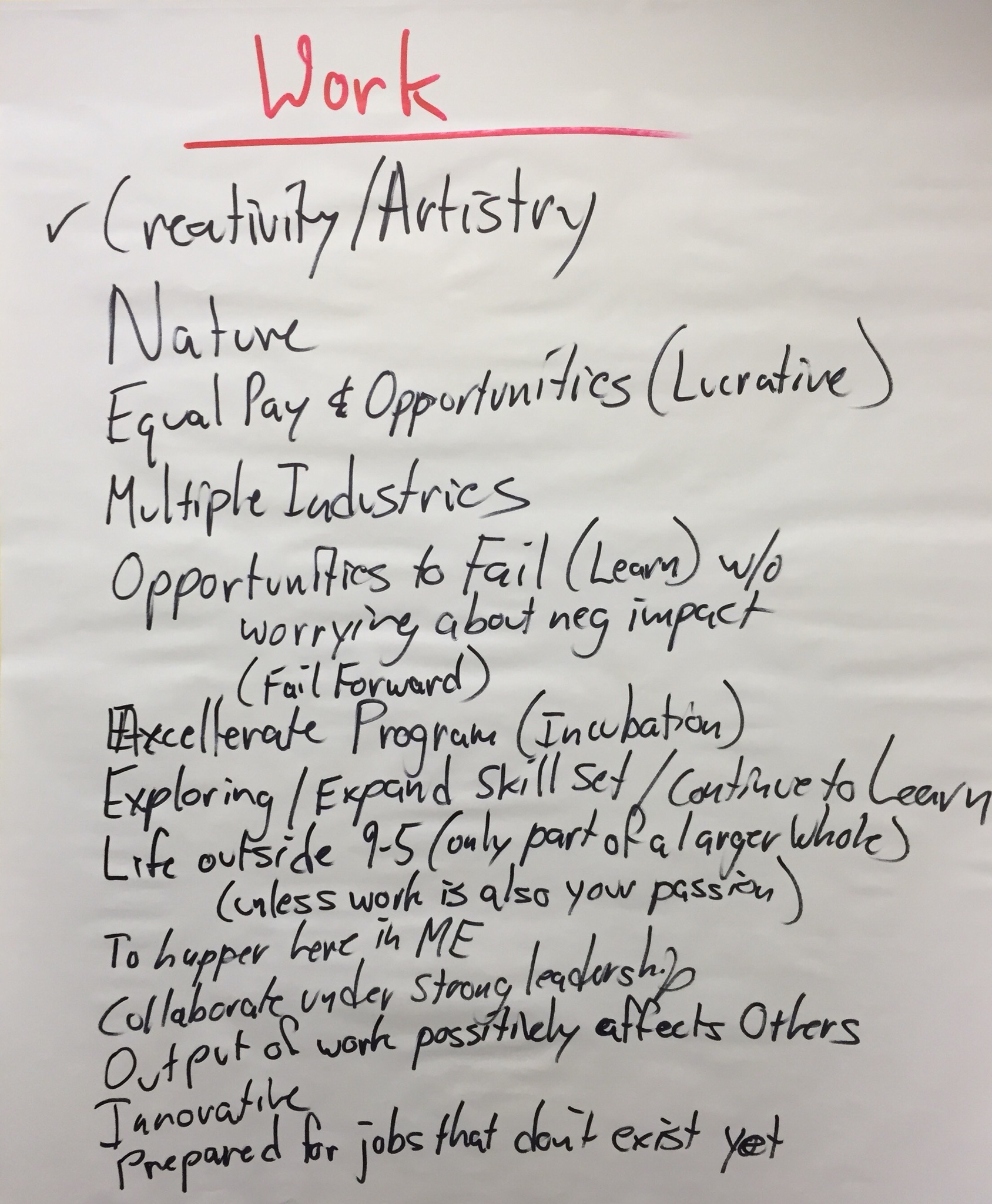
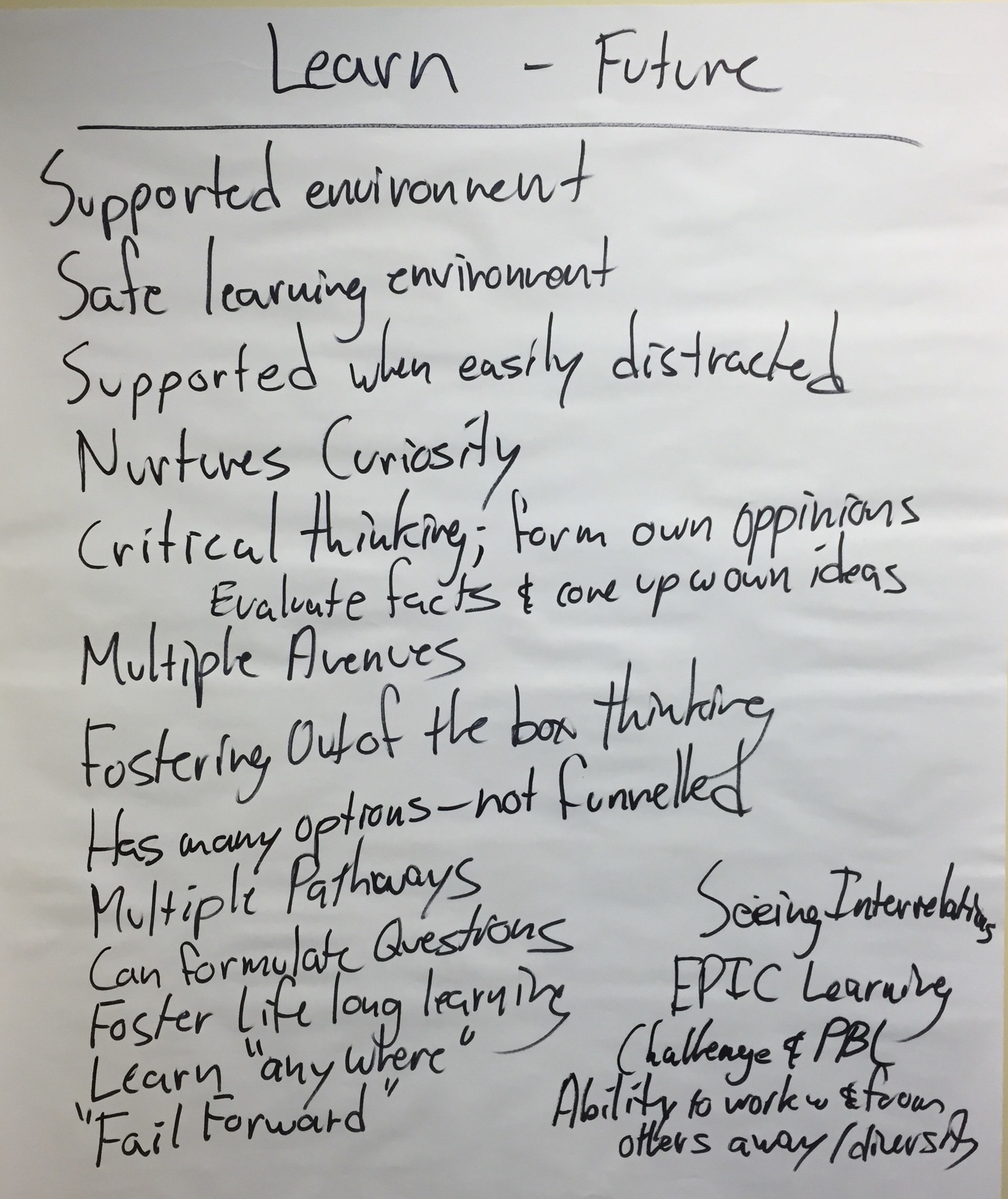
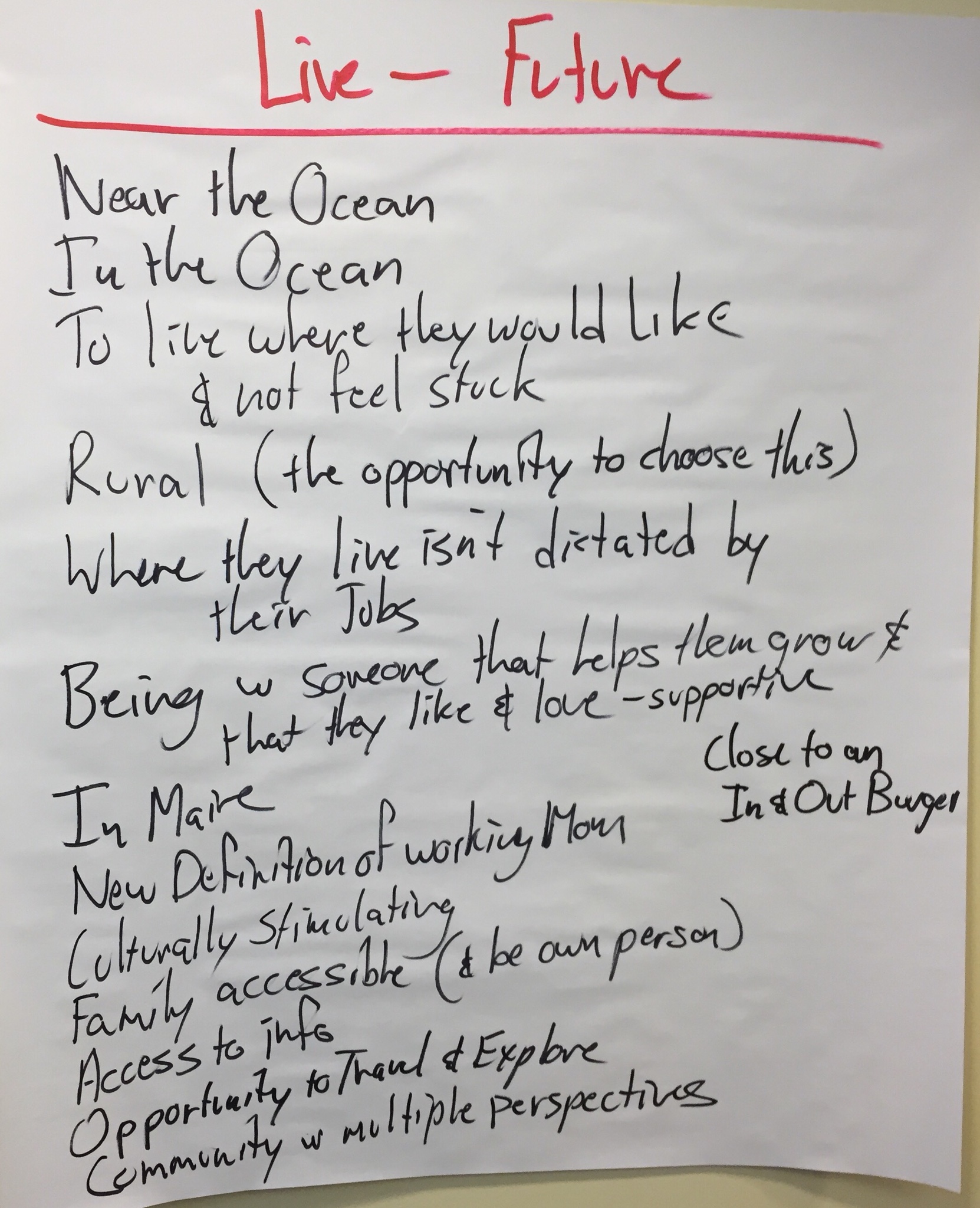
Here’s what the team generated:

These charts represent the Team’s Preferred Future.

Identifying Our Shared Vision Vision for Learning

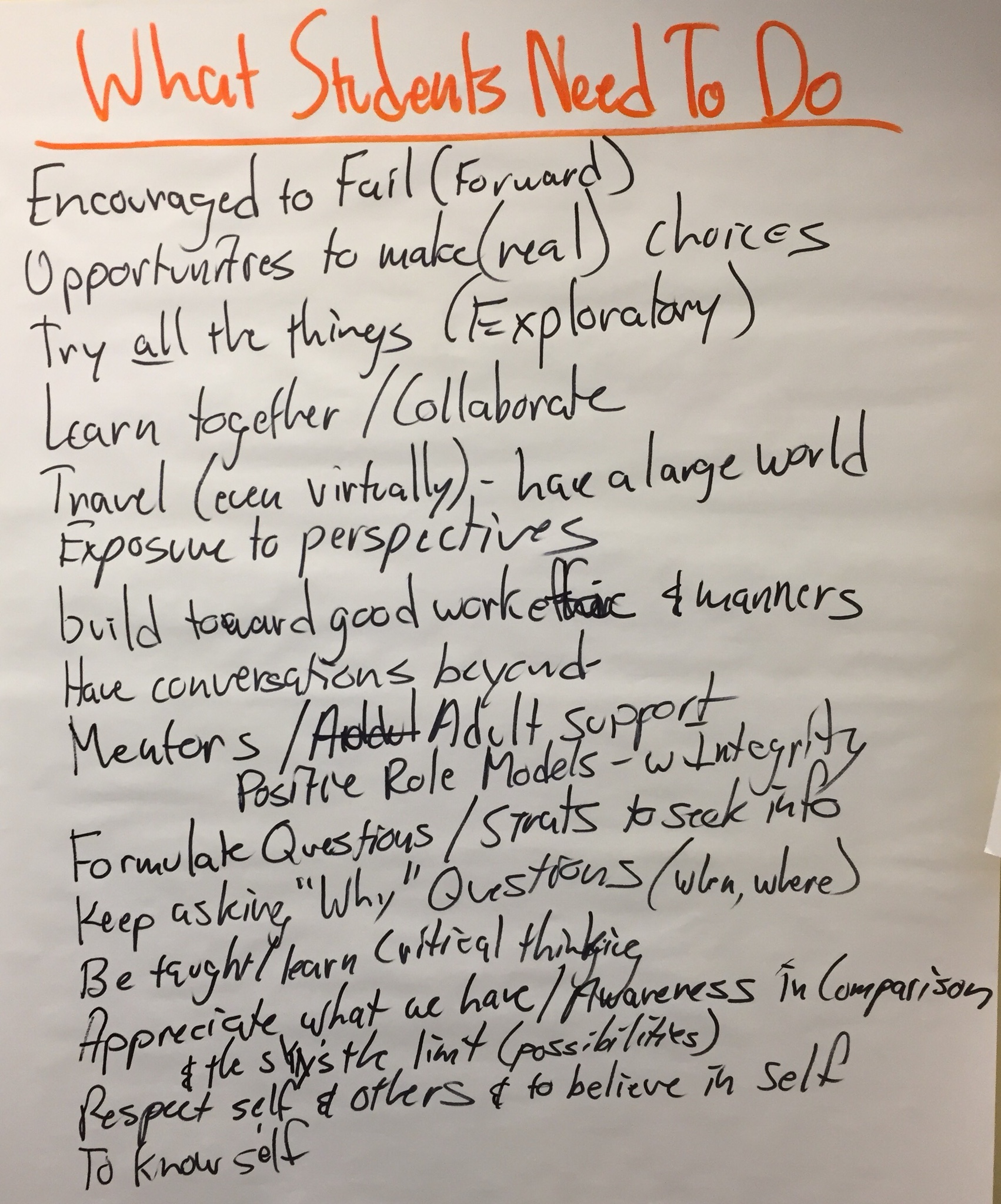
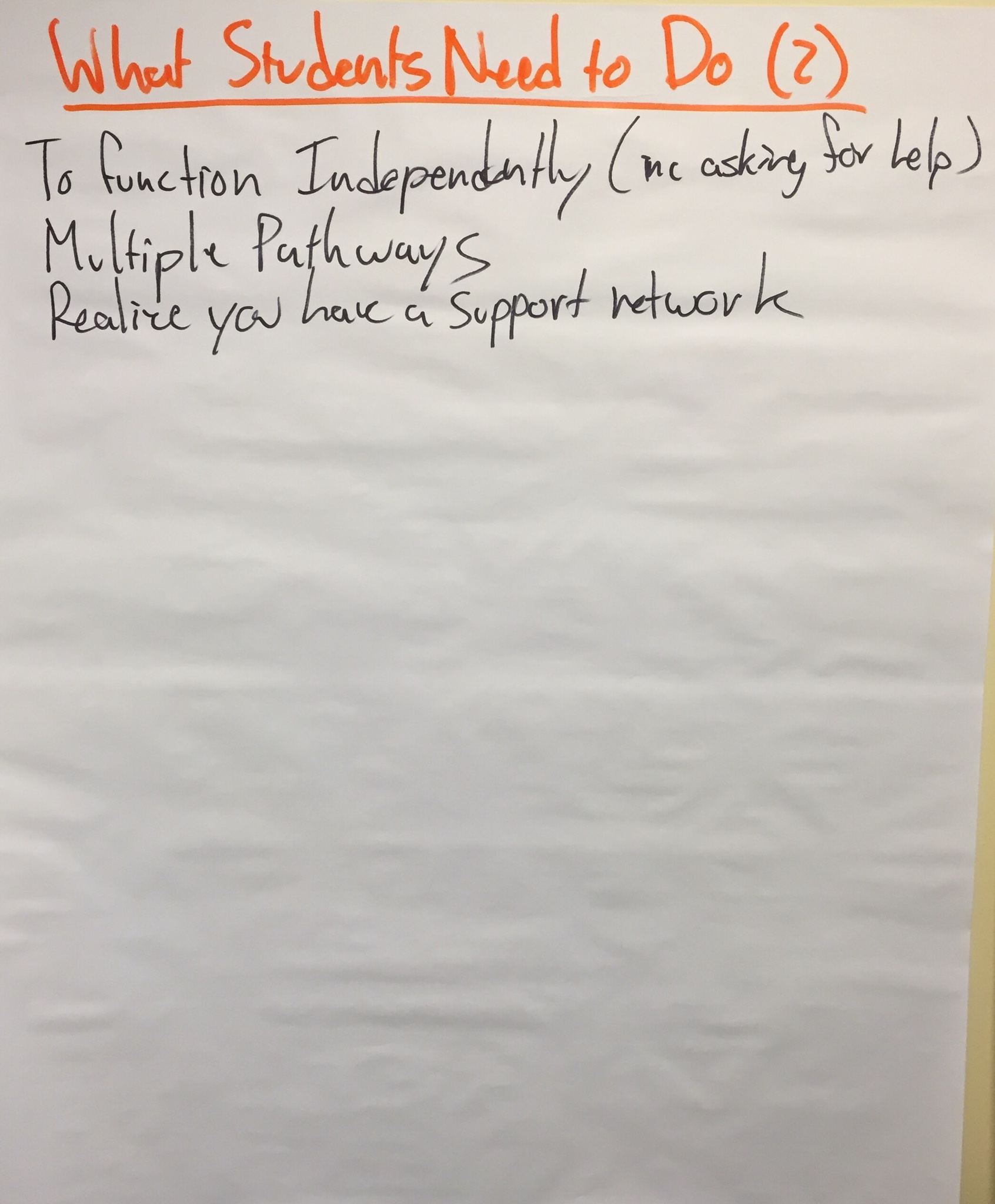
The next step was to think about these same students today. If the charts above represent our preferred future for these young people, what do they need to do today to get ready for it?

Here is what we generated:

So, these charts represent the Team’s Vision for Learning.

Creating Our Strategic Plan

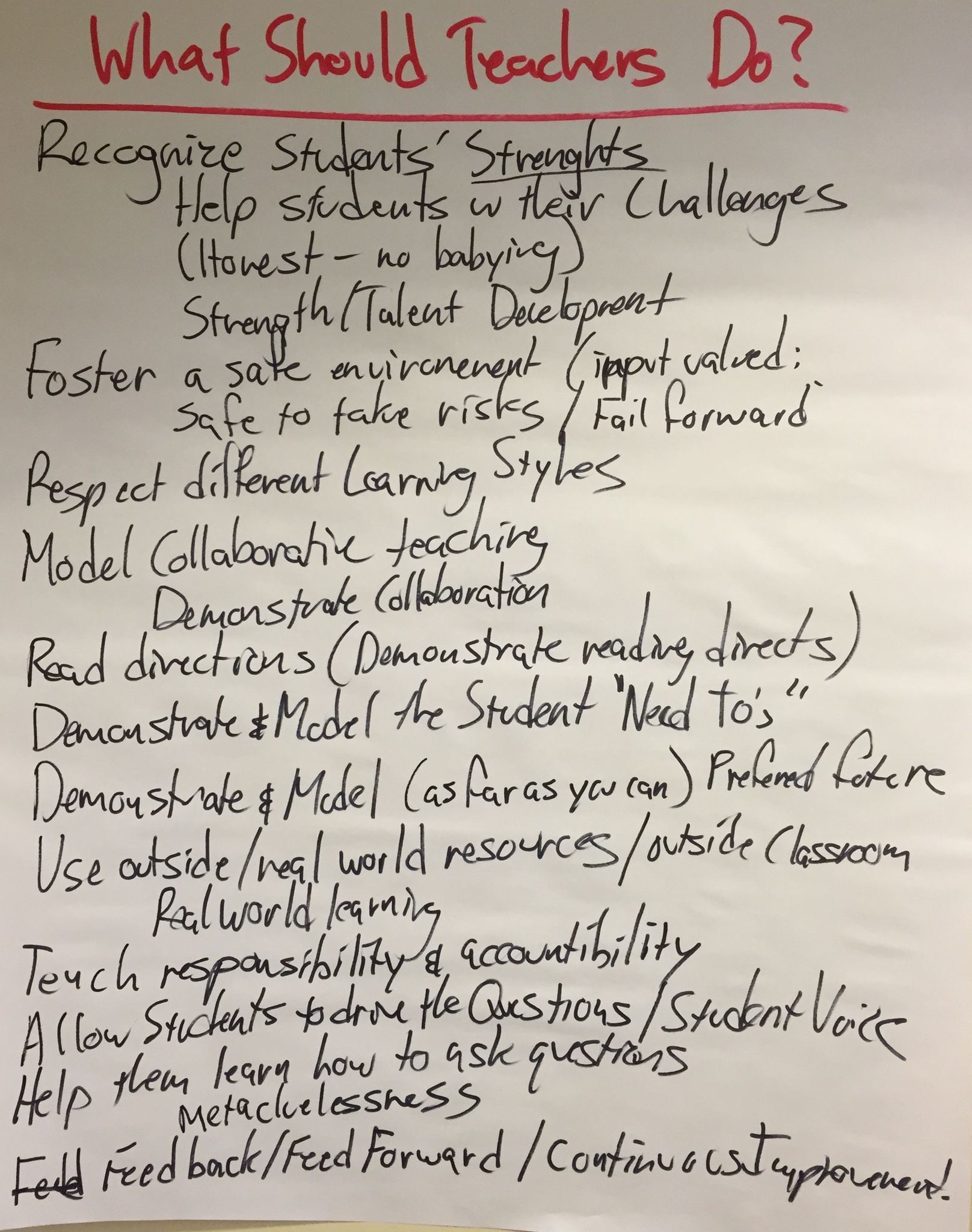
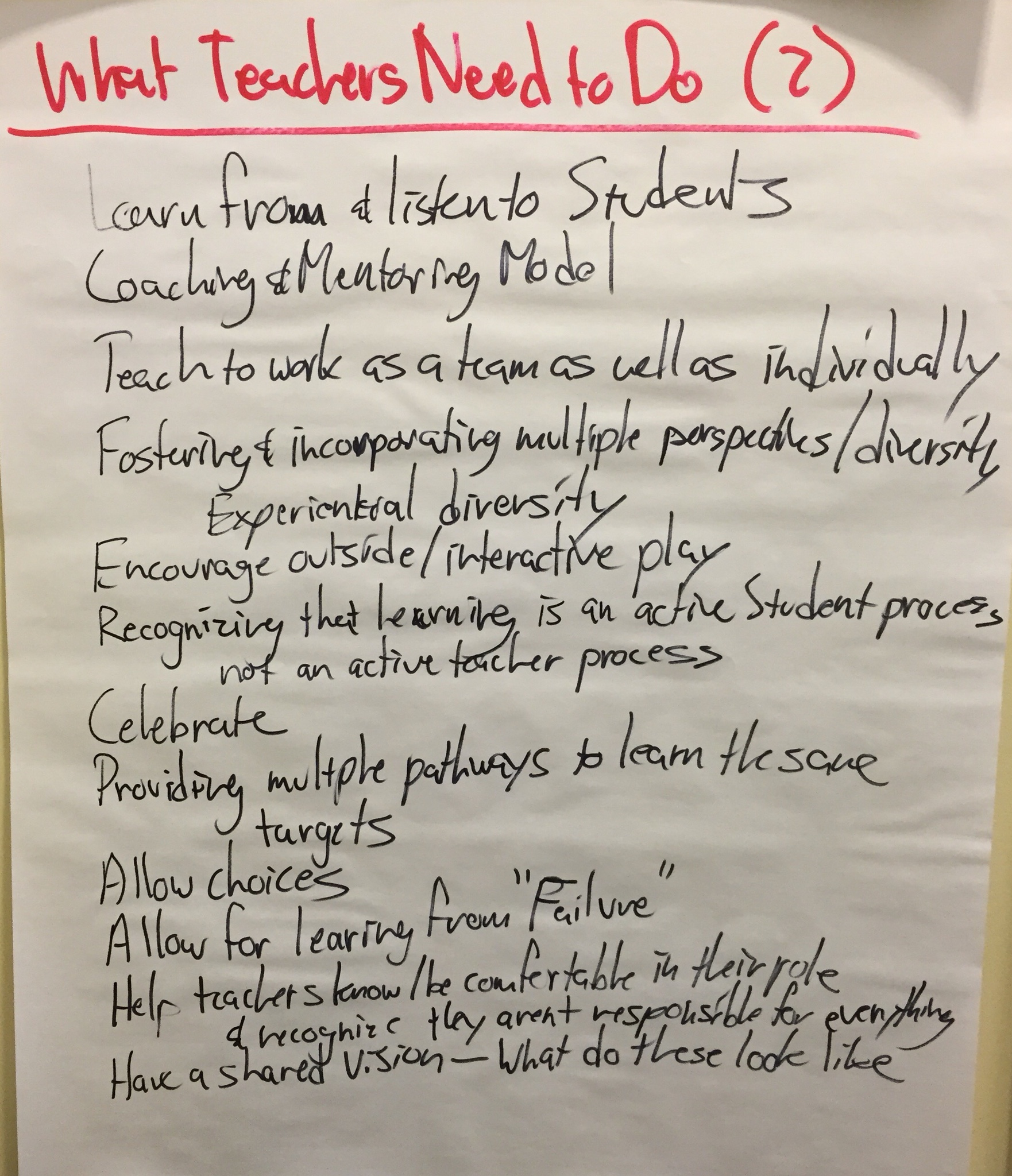
So, if this is what we believe students need to start doing today to get ready for the Preferred Future, what do do we believe teachers need to do, so students can do what they need to? Our thoughts:

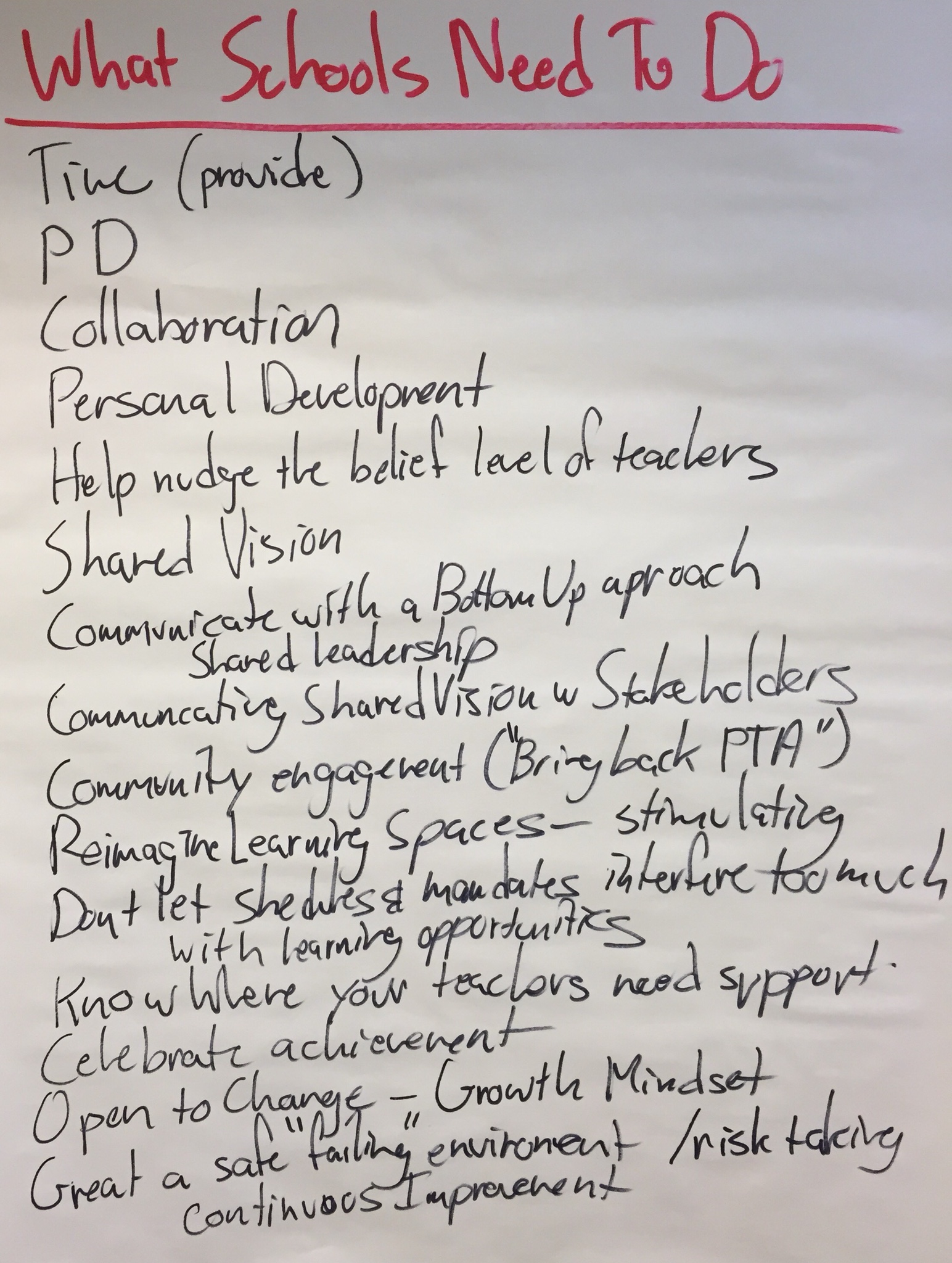
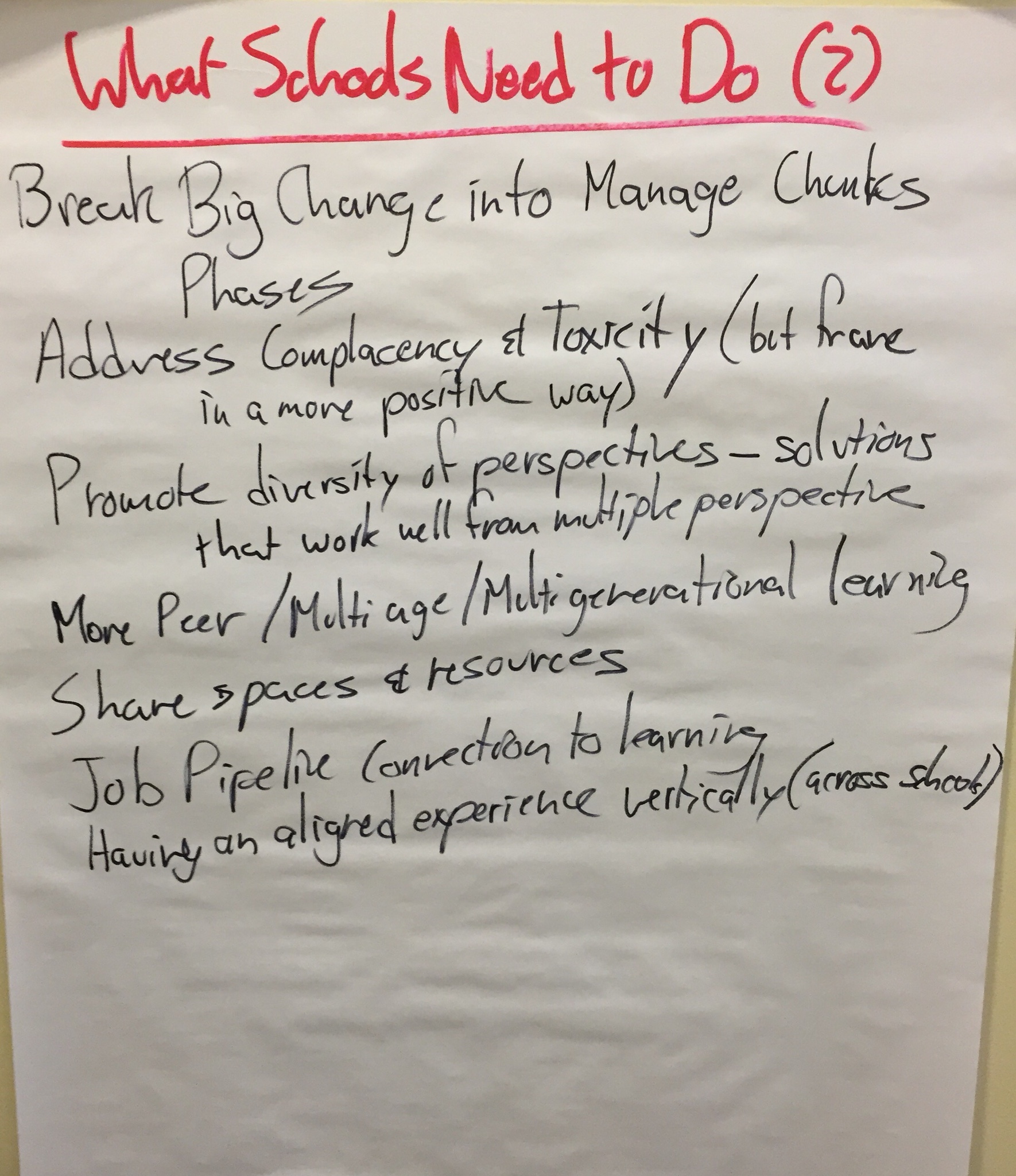
And then, what do we believe schools (principals, tech directors, district administration, etc.) need to do so teachers and students can do what they need to? The Team’s lists:

These charts represent what we hope teachers and schools might adopt as their strategic plan.

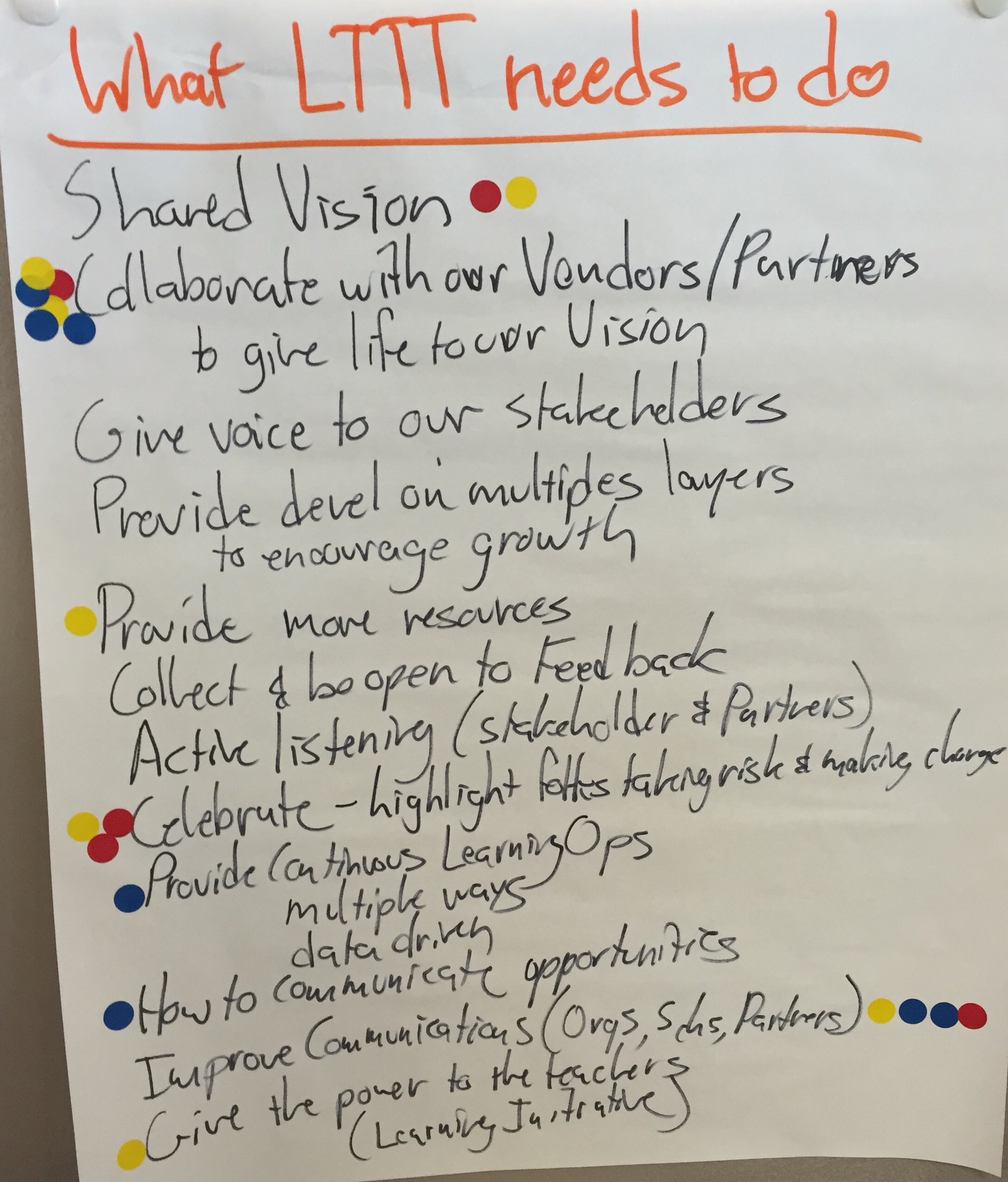
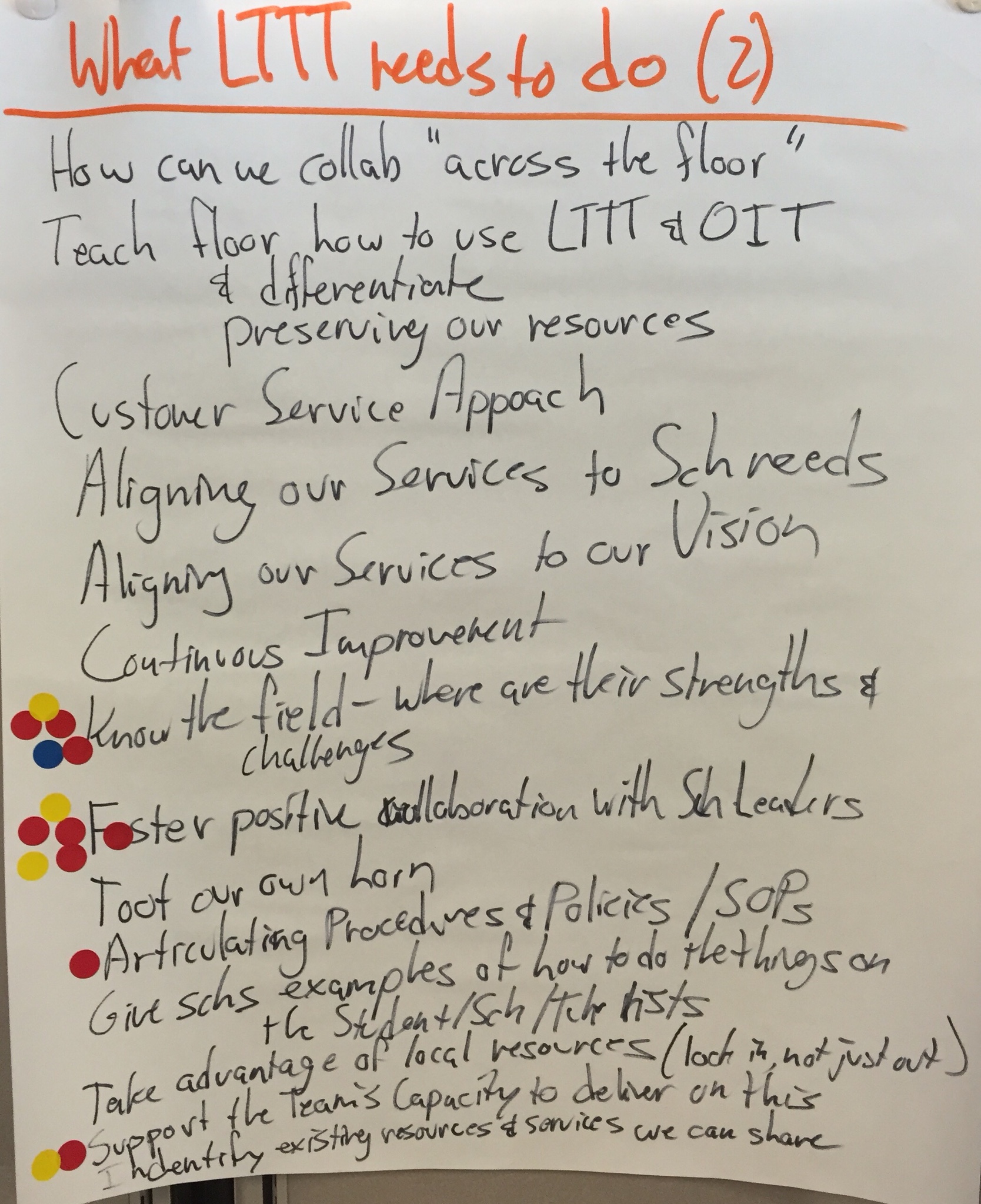
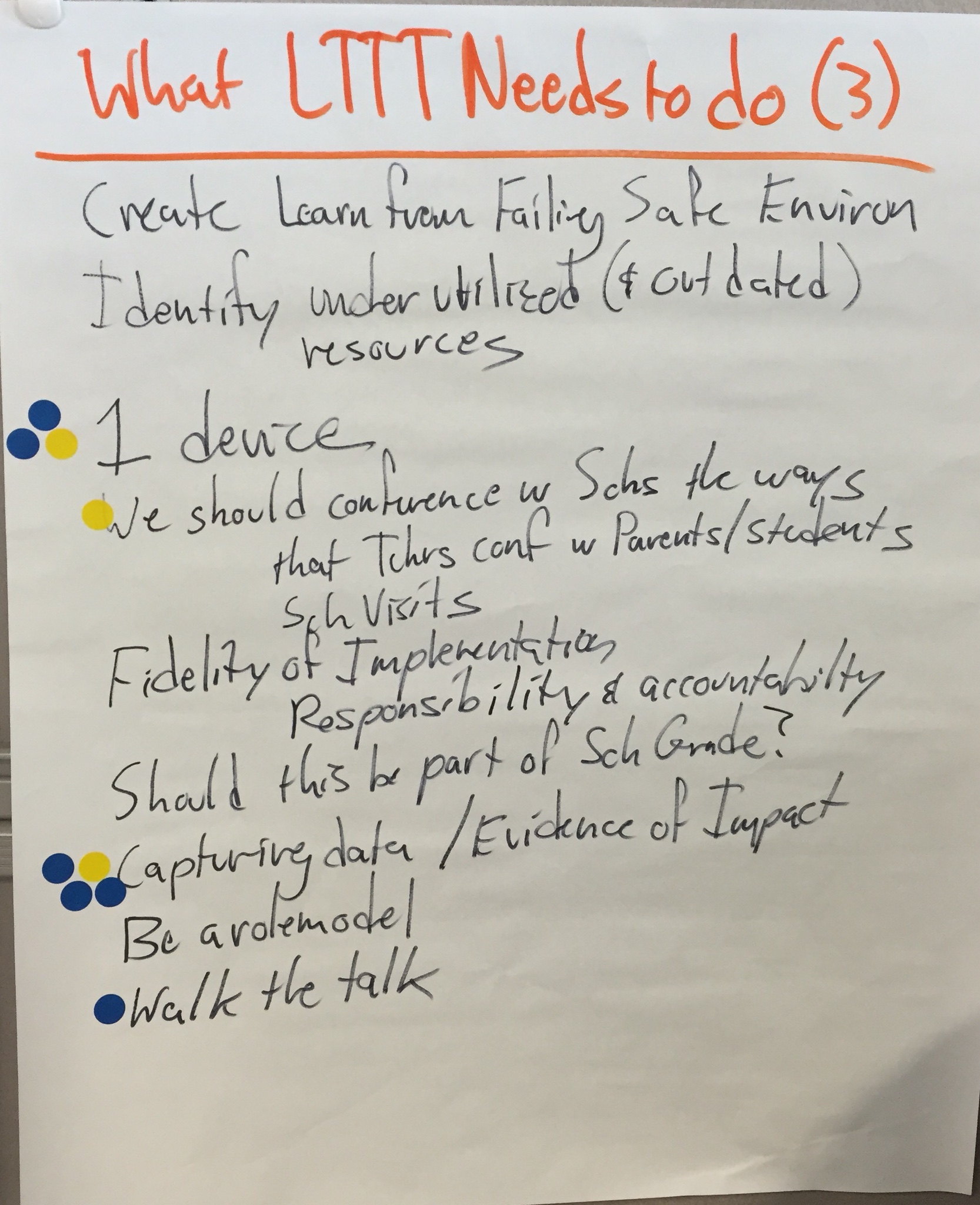
But they also lead us to think about our own work and responsibility for making our Vision for Learning a reality. What does the Learning Through Technology Team need to do to support the work of students, teachers, and schools?

Prioritizing

Accomplishing 3 pages of strategic steps is a daunting task! (Actually, self defeating! We need a little focus!) I gave each Team member 6 dots to place on the charts. The prompt was, “Which are the most important pieces for us to work on right now.” All of them are important, and should be tackled as some time, but we needed to identify where to start. Team members could distribute their dots in an way they wanted (all 6 on one item, or spread out across items, etc.), but they each only had the 6 dots.

You can see where they placed their dots above.

That translates into the following as the Learning Through Technology Team’s Strategic Plan for the coming year:

  • Collaborate with our Vendors/Partners to give life to our Vision
  • Foster Postive Collaboration with School Leaders
  • Know the Field – where are their successes and challenges?
  • Improve Communications (Organizations, Schools, Partners)
  • Capturing data / Evidence of Impact

Where We’ll Go Next

It’s not enough to capture a Vision on paper. It needs to be used as a filter and a compass.

In order to do that, we’ll have to polish our Vision for Learning into a shareable document (it’s a little too rough for sharing in this current form), and create a mission statement. Then we can put together a “Compass and Filter” document (that includes our vision, mission, and strategic plan goals). We will use it to help us decide how to prioritize and do our work, and help us decide which new opportunities to take on. We can also share it with the schools, organizations, and other partners we work with (or might start working with) to see where there is alignment between our work and theirs.

But I’ll save that for future blog posts…

Shared Leadership Teams – The Series

The multiple perspectives, the buy-in from diverse stakeholders, shared leadership teams are a powerful tool in your arsenal for making large-scale school change stick. Shared leadership teams focus on the strategic work of the school. They focus on school change and improvement. They are not simply an advisory group. They are the decision making body.

Shared Leadership Teams: What They Are and Aren’t

Schools already have lots of groups that they call leadership teams. But many of them are not what I would refer to as “shared leadership teams,” not in the sense we’re talking about here. I would probably call them “management teams.”

Schools frequently have teams that are used to help share information between building administration and teams or departments, or to decide how and when to transition between terms or trimesters, or how to handle lunch on days with special events, or how to schedule fundraisers from various groups, etc.

I am not implying that these management tasks are unimportant, because they are. Further, I believe they are best handled with teacher input and representation and not by administrative edict.

To me, however, management teams handle tasks related to the day to day running of the school.

Shared leadership teams focus on the strategic work of the school. They focus on school change and improvement.

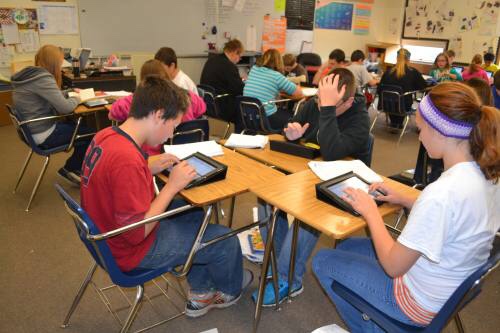
Students learning with tablets

In Auburn, we call them “Design Teams” because of the design and planning nature of their task. Another district I work with calls them “Implementation Teams” because they will lead the implementation of their strategic initiatives (and their “design teams” serve a specific function in school construction projects). Other folks call them “Work Groups.” It doesn’t matter so much what they are called, as the work that they do.

Design teams assess where in the implementation process your educators are, identify timely next steps, assist in providing formative feedback to those educators, help troubleshoot and problem-solve the challenges of implementation, and facilitate the sharing of ideas. It’s roll-up-your-sleeves strategic work. It’s about assessing what needs to be done right now to help your initiative be successful. And it’s about collaboratively crafting the overarching systems and structures that will guide your project.

Leadership Teams

For example, when Auburn started their 1to1 iPads in primary grades initiative, the design team for that initiative met periodically to plan various aspects of the program, including: what grade level we should begin with (kindergarten); the original name of the initiative; how to handle a small exploration program in 5 classrooms to figure out how we wanted to move forward with the program; how to craft a small randomized control trial (research study) at the beginning of the project, to insure we were collecting and analyzing data on how we were doing. Later, the role of the team evolved to focus on both on-going support of teachers and the special needs of rolling out 1to1 tablets to a new grade level each year.

As stated previously, shared leadership teams are made up of diverse stake holders. The power comes from these diverse perspectives.

But they are not simply an advisory group. They are the decision making body.

And, as much as possible, decisions are made by working toward concensus. Not everyone has to agree, but, as much as possible, everyone should be able to live with a decision. And lots can be learned by asking (nicely) someone to clarify their dissenting point of view. I find that often they have some concern many of the rest of us haven’t thought about, but that we should consider and plan for.

Keep in mind that lots of perspectives and shared decision making does not mean letting folks do what ever they want (if that’s worrying you). If you are the administrator, you still help set the non-negotiables and parameters of a decision. As a member of the team, your perspective is one of those shared in the discussions.

So shared leadership teams are not advisory groups, management teams, nor information dissemination groups (even if these are important tasks that need to be addressed somehow within the school or district).

What shared leadership teams are is a driving force to do the following:

  • Work Out Details
  • Solve the Problems
  • Invent the Next Pieces
  • Systematic Change and Continuous Improvement

How to Avoid Unintentionally Sabotaging Your Shared Leadership Teams

So, if you are forming shared leadership teams for your initiative, you clearly want to reap the benefits that come from them: increased buy-in, soliciting stakeholder voice and choice, designing and planning strengthened by the power of multiple perspectives. And, if you are the one putting the leadership teams together, then you’re already a leader in your school or district (a little positional authority is usually needed to get them started).

So guess the most common cause of unintentional leadership team sabotage

Shared Leadership

You are!

Yup. In my experience the most common source of sabotage are the people who put the team together in the first place. They never intend to. It just happens naturally.

How?

You are leaders. You have postitional authority. The stakeholders at the table are used to your leadership. Probably, most of them appreciate your leadership. So what do they do? They do what they’re used to. They defer to you. And suddenly you have one leader with 14 people around a table, not a shared leadership team with 15 stakeholders expressing their diverse perspectives.

How do you know if you are unintentionally sabotaging your shared leadership team?

Pay attention to what percent of the talk in the shared leadership team (not counting the facilitation, just the real talk – sharing and examining ideas, designing components, developing plans) is from you or other school leaders with positional authority. If the answer is more than 25%, you have tweaking to do. If it is more than 50%, you’re in trouble (and won’t reap the benefits of shared leadership). If it is more than 75%, you are a master saboteur and are totally undermining your intentions of having a shared leadership team? (Ok, said a little tongue in cheek, but you get my point.)

In truth, we (school leaders) are good at what we do. To not do what we are good at is hard! It’s counterintuitive! But, in this case, it is also counterproductive.

So, what can you do to avoid the unintentional sabotage?

You will have to shift your leadership hat from directing and sharing your wisdom, to facilitating and soliciting wisdom from others. These strategies might help when meeting with your shared leadership team:

Wait Time: Just like in the classroom, sometimes you just need to pose your question or prompt and wait. And wait. And wait. Try not to be the first one to offer ideas, suggestions, or opinions. Just look around the room expectantly, someone else will eventually break the silence. The more the group gets used to actually expressing their ideas, the shorter the wait will be. But even when your group is at that point, try not to be one of the first ones to talk.

Actively Solicit Others’ Ideas: Just waiting probably will not be enough. The team might need nudging. Turn to team members and say, “Betty, what do you think?” You need to do it in a gentle way. It can’t sound like you’re trying to put anyone on the spot. Maybe start with someone who has been quiet, but you know is likely to have a good idea. Maybe do a “round robin,” where each person shares an idea in turn. Maybe after a couple people have shared ideas, ask an especially silent person what they think. When you see someone has a facial expression that says they have an opinion, say, “Mark, you look like you have something to say…” Spend more time getting others to share their ideas, than you spend sharing yours.

Save Your List for Later: It is likely that everyone is waiting for you to speak. Don’t. The quickest way to allow others to not share their voice or perspective is for you to speak. Save your input for later. (You do get to share it, just not first – or second!) I know you already have your own ideas about what needs to be done, how it should be done, and what the next steps are (you are a leader, after all!). So, keep that list to yourself! For now. Save most of your speaking for facilitating and getting others to share their ideas and opinions. But do keep the list in your head or on paper. Wait for others to share those ideas. Cross them off as they come up (from others). After the discussion has gone on for a while, and lots of ideas are on the table, then you can cycle back to sharing ideas from your list that aren’t crossed off yet. Maybe share them just one at a time, with ideas coming from others in between.

Frame Your Ideas as Questions, not Suggestions: Folks know you have ideas. They probably generally like your ideas. They are used to using your ideas, and probably even are accustomed to deferring to your ideas. The way to not allow them to simply wait and take your ideas is to avoid framing your ideas as ideas or suggestions, but rather as questions, “What do you guys think if we were to…?” This way, you are still soliciting members’ ideas and opinions, but ideas and opinions about the ideas you share. It says you value and are actively seeking their input and voice.

Warning #1: You might be a little mad at me right now (maybe deep down inside – maybe just a little – admit it!). Why can’t you share your ideas? You have tons of experience working on initiatives, and with running schools and educational programs. Isn’t that experience valuable? At the very least, as a shared leadership team, shouldn’t you be participating as an equal partner in the team, and chime in just as everyone else should chime in?

The answer, of course, is “yes.”

But not right now. This post isn’t about you or your expertise. It’s about developing the capacity of a shared leadership team. Do you want to sit around a table of silent educators, where yours is the “only” voice? Or do you want to sit around a table with lively discussions, ideas flying, and good thinking being applied to the work? This post is about how you get the other stakeholders to stop being silent. Once they stop being quiet or hesitant to share their opinions and ideas, that’s when you get to start participating as a regular team member.

Warning #2: It will be painful at first. It doesn’t matter what you tell folks about how we will do this together and we are all leaders in this initiative and that this team was formed so we could get everyone’s perspective. It still violates the leadership paradigm they are used to. Folks will stare at you and wonder why you aren’t telling them what to do or what you’re thinking. In fact, the first couple suggestions that come from folks who aren’t used to shared leadership may even be delivered with a tone that sounds a little spiteful with an undertone of “This isn’t brain science! Why didn’t you say this already? Why am I having to say it?!” They might even treat you (for a while) like they don’t understand why you aren’t doing your job or why you’re just sitting there.

The good news is that once teachers, students, or other stake holders start sharing their ideas and see that those ideas are wanted and valued and even used(!), they will be much more willing to speak up. And at that point, not before, you can say (if you feel you need to), “That’s why I was just sitting there. To get you folks to start speaking up!”

Shared Leadership Teams: The Power of Diverse Perspectives

If many hands make light work, many minds make smart work.

Shared Leadership

Bette Manchester taught me long ago, at the beginning of MLTI, not only that leadership was everything, but that shared leadership teams performed better for an initiative than single leaders did.

Years later, I worked for a small, private, educational development organization. We created non-traditional schools for underachieving students in good sized cities. There were four of us. Two came from the business world and understood the business side of education and how to work with executive-level decision-makers in large districts. One was a former high school principal who had also worked in the corporate world as a VP for Education for a large, national cable company. He understood school leadership and administration, and community and business partnerships. And there was me. I understood pedagogy, student motivation, and professional development. And we were all Type-A personalities!

It made for the most interesting phone conversations (we lived all over the east coast and when we weren’t onsite at a school, collaobrated online and on the phone). My wife would come home from work to hear the tail end of one of my conference calls, grimace, and say when we were done, “Wow! That must have been hard!” I didn’t understand. The conversations were lively, but we weren’t arguing or disagreeing, really. We were strong personalities, passionate about shared work, critiquing an idea or plan from our own perspectives and areas of expertise. What made it not arguing was that we actually listened to each other, and revised our ideas and plans with our input from each other. We always ended up with a much stronger plan because it stood up to scrutiny from multiple perspectives.

Since then, whenever I’ve had an initiative or project to work on, I have started by putting together a shared leadership team (or convinced the folks I’m working with to put together a shared leadership team).

These teams are made up of a spectrum of shareholders: students, teachers, administrators, school committee members, parents, and community members. But you aren’t just looking for a diversity of positions, but also perspectives. And you don’t want all “yes-men” on the team, either. While you might not want too many active blockers, you certainly want some of the folks who are looking critically at the work and coming to the table with their “yes, but”s to be addressed.

Auburn's iPads in primary grades

As an example, when we started our first-in-the-nation 1to1 iPads in primary grades initiative, one of the first things we did was put together a “Design Team,” the folks who would design the initiative. In addition to getting input from teachers, the Design Team included the following: Superintendent, Asst. Superintendent, Curriculum Director, Tech Director, Multiple Pathways Director, Principal, Elementary Technology Coach, District Grant Writer, School Committee members, parents, and leaders from several related community and educational organizations, such as the Auburn Public Library, the Career Center, the Chamber Business/Education Committee, City Council, ETC, NEREL, and the Maine International Center for Digital Learning.

At least one of the Design Team members was not necessarily supporters. But her concerned position about how we were going to use iPads with young learners insured we were addressing those concerns early in the design process. Further, seeing how we going about designing the initiative in thoughtful ways alleviated many of her concerns. (In the end, she became a supporter of the program, even when she continues to be critical when we aren’t as good about living up to our high standards for the program as we might be.)

And a key learning from our using shared leadership teams? No one of us is as smart as all of us together. The secret is the power of diverse perspectives.

Another Wonderful iPads in Primary Grades Institute Completed

It has been a (VERY) busy fall, but the (wonderful!) culmination of it all was last week's Leveraging Learning Institute.

This was Auburn School Department's third year running the institute focused on lessons learned from our first-in-the-country iPads in primary grades initiative. We had about 130 participants, mostly from across Maine, but also from North Carolina, New York, Pennsylvania, and Massachusetts.

We had some nice press coverage:

Look over the whole Institute website here, but you might be especially interested in the resource documents from this year's sessions (we're still posting resources, so check back in a week or so to see what other resources are shared) or info about our presenters.

We don't have any details for you yet, but we have already started planning the next Leveraging Learning Institute…

Deliberate Leadership for School Change: an Overview of the Lead4Change Model

Large-scale school change often involves both complex systems (lots of different people, schools, organizations, etc.), as well as, things that teachers have never experienced themselves.

That's why schools need a model of deliberate leadership for school change. One such model is Lead4Change.

Lead4Change grew from early learnings from the Maine Learning Technology Initiative (MLTI) about what strategies successful schools were using, and were often missing at schools having less success. Working with a variety of schools designed to motivate students, it became clear that the lessons generalized nicely to all kinds of school change, not just 1to1 laptop and tablet initiatives.

This 16 minute video provides an overview of the model.

My school district is applying this model to our technology initiatives, MLTI & Advantage 2014, and several districts, including mine, is using it to help shape our work around Customized Learning.


Strengths of the Early MLTI Program – Let’s Keep Them Going

Maine's learning with technology initiative (MLTI) is going through changes this year:

  • The contract renewal framed it not as a Maine contract, but as a multi-state contract, in hopes of making it easier for other states to do their own statewide initiatives.
  • When our governor announced the new contract award, it wasn't for our 12-year partner, Apple, but rather for HP.
  • The governor is allowing districts to select from any of the 5 finalist (Apple is included).

I'm not sure how all these changes will play out. My hope is that Maine's educators will rise to he occasion and take MLTI to the next level. My fear is that this will eventually kill what has been an internationally recognized learning program.

But it has made me think back on MLTI and what we identified that made the early MLTI such a powerful initiative. I found a couple old articles that address that question:

What we identified then as the strengths of this initiative include:

  • Access to technology
  • A focus on learning
  • A focus on leadership
  • Context-embedded professional development
  • Technology as a tool, not a curriculum area
  • Thinking how technology can change/improve teaching and learning

I hope Maine's educators, including the DOE and MLTI staff, continue to place an emphasis on these areas, and, despite the changes to program, MLTI continues to be the strong impactful initiative we had 8-10 years ago.


What We Want from Technology – MLTI, Customized Learning, and School Vision

There have been many discussions around Maine since the Governor announced schools would have choice over which solution they select for MLTI for the next four years. But most of those conversations have focused on the device, or its capabilities, or why it is “my preferred device,” or why people are worried that the device they aren't that familiar with will not be sufficient for the task at hand…

I wish so much more of those conversations had instead been about school visions for learning, and what we hope to get from technology for learning. What role can technology play in learning? What is your school's or district's vision (ours is here), and what is the role of technology in fulfilling that vision?

And for Auburn, as I would guess for other districts in the Maine Cohort for Customized Learning, we are concerned about technology's role in helping us succeed with implementing Customized Learning (such a critical part of our vision).

Here is what we think the roles for technology are for learning, especially for Customized Learning:

  • Instructional Resources for Building Foundational Knowledge
  • Instructional Resources for Using Knowledge, Creating, Complex Reasoning, and Projects
  • Learning Progress Management
  • Supporting Independent Learning
  • Assessment
  • Home School Connection
  • Student Motivation

How are you currently using technology for each of these? What are teachers doing (maybe in your district, but maybe in another) that shows you exciting ways technology could be used for each of these? What is best technology practice for each of these roles?

But much more importantly, as Maine's districts think about selecting a solution for MLTI, how does each proposed solution measure up against each of these roles for technology?

You don't have to be interested in Customized Learning to be interested in these roles. But I don't beleive a school can make a satisfactory decision about which solution to select if they are only thinking about the device or the operating system…


Schools Have MLTI Choice, But Compare the Solutions!

When Maine's Governor announced that he was awarding HP the contract for the Maine Learning Technology Initiative (MLTI), and not to Apple (who had been Maine's partner in MLTI for the last 12 years), he also told schools that they could choose from any of the 5 finalist proposals. Schools had flexibility to decide which solution matched their needs best.

But many of the discussions that have followed seem to have focused almost exclusively on the device (mostly the HP laptop, the MacBook Air, and the iPad). I think because of the focus on devices (and the passion techies have for their devices!), the conversations seem to have bordered on “Platform Wars” at times (with the vim and vigor that all religious wars have!)

But MLTI was never supposed to be about platform, nor the specific device, and not even “job skills.” It was always supposed to be about tools for learning. And I wish schools would discuss learning tools more, and less about device, OS, and job preparedness.

Not even the proposals are about the device. The device (laptop or tablet) is only one component of a whole solution: device, network, software, tech support, projection, professional development, etc. (Supposedly, in support of learning…)

So I'm hoping that schools are looking hard at their school visions for learning, thinking about technology supporting teaching and learning, but also doing a side by side comparison of the solutions as they work to make their decisions.

Any of you who are involved with Customized Learning may have participated in the Complex Reasoning training. In that training, we learned that Decision Making happens effectively when you identify criteria, rate the possible choices against those criteria, and then choose based on the ratings and analysis.

I encourage each of us, as we think about what direction we are going to go, to think not primarily about our preferred OS or device, or “job prep,” but rather about comparing the full solutions:

  • How does the PD compare? (And is it focused on teaching and learning, or on the device and the software? Does it focus on leadership for implementing 1to1 and for school change?)
  • How does the software compare? Is it just productivity tools or is it a good set of software for teaching and learning (including productivity tools)?
  • How much technical support can we expect? Repairs? Imaging? Set up?
  • What about data storage? How much? How easy? What happens after the contract?
  • What about the device? Appropriate for student use? Battery life? Quality of network? How well does their projection solution work, not just for teachers, but for kids?
  • What is the provider's experience with education? (Not simply providing tech, but in helping schools use their tech for teaching and learning – how well do they understand teachers' context?)

Auburn has a good idea of what choice we are selecting, but I'm not arguing that you choose what we choose. I am arguing that you look closely at comparing the 5 solutions against all these criteria. If you and your decision makers do that, and you choose something different that we did, that's great! At least you compared all elements of the solution.

I would just be disappointed if you chose based on “one criterion” (e.g. OS, favorite platform, or “it's the device I use”) or used criteria that don't match the vision and purpose of MLTI (e.g. used “job prep” instead of “learning tool” for your purpose), even if you end up making the same choice we do.

The State has provided a side by side comparison document (available here).

You don't have to use the point scores from the Review.

Do your own rating, but compare the solutions against all those criteria.


Overview of The Phases of Implementing Customized Learning

Implementing Customized Learning can certainly seem like a daunting task! I have written previously about the need to find a way to think of approaching implementation in a manageable way.

In reviewing the work of other schools and organizations further along in the process of implementing Customized Learning than we are, there are lessons for school leaders about effective and less effective approaches to implementation. By looking at the contrasts between the implementation efforts of an initiative that works and those that do not, educators can learn something about what the successful schools have done and what the less successful schools might not have done.

One of the major lessons for leaders has been “not all at once!”

There are many components to the school reform effort, and following a certain sequence seems to lead to successful implementation more often than other processes. Although there is flexibility in how districts implement each phase, successful implementation of Customized Learning moves through these five phases:

  • Awareness Phase
  • Classroom Culture Phase
  • Instructional Design Phase
  • Instructional Implementation Phase
  • School Structures Phase

Each phase focuses on building the capacity of teachers to implement a system of Customized Learning, but by making the transition manageable by breaking it down into doable steps. Below is an overview (the “deliverables,” if you will) for each phase:

Awareness Phase (In the Current System)

  • Overall Goals for this Phase: Examine our collective beliefs about learning and school; Start to build a mental picture of Customized Learning
  • Own the Learning Training (Customized Learning Awareness)
  • Shared Vision, Burning Platform, Beliefs of Learning Documents Established
  • Able to Articulate Beliefs of Learning, Vision, Mission
  • Explore How Beliefs Match Practice
  • Familiarity with Curriculum Organization
  • Start to Make Learning Transparent to Students
  • Able to Articulate Basic Information about Customized Learning and a Student Centered Environment


Classroom Culture Phase (In the Current System)

  • Overall Goals for this Phase: More consistently create a learner-centered classroom culture, including procedural efficiencies; Make the curriculum more transparent and navigable to students
  • Classroom Design & Delivery Training
  • Create a Learner Centered Culture that Honors Student Voice and Choice
  • Create Procedural Efficiency in a Learner Centered Classroom (e.g. Rules, Student Input, Standard Operating Procedures)
  • Tracks Student Progress on Specific Learning Goals/Targets vs Activities/Assignments
  • Learning is Transparent so Students Can Navigate Their Own Learning (e.g. Student Goal Setting, Use of Curriculum Organization)
  • Initial Use of Mission, Vision, etc., as Decision-Making Screen
  • Recognize It Is Not About the Tools, But Rather About How the Tools Are Used (Parking Lot, SOPs, PDCAs, Code of Cooperation, Affinity Charts, etc.)


Instructional Design Phase (In the Current System)

  • Overall Goal for this Phase: Designing lessons and units for Customized Learning that reflect instruction for both lower-level and higher-level thinking
  • Instructional Design & Delivery Training
  • Balanced Instructional Model
  • Unpacking Learning Targets with Students
  • Instruction Organized Around Measurement Topics (Curriculum Model)
  • Student Self Pacing & Acceleration
  • Instruction for Lower Taxonomy Levels (e.g. identifies online resources for Level 2 Goals)
  • Instruction for Upper Taxonomy Levels (e.g. Seminars, Projects, etc.)
  • Consistent Use of Mission, Vision, etc., as Decision-Making Screen
  • Separates Academic Feedback from Non-Academic Feedback


Instructional Implementation Phase (In an Evolving System)

  • Overall Goal for this Phase: Become skilled at consistently implementing the practices (motivation, interventions, grading and assessment, etc.) to carry out the lessons and units.
  • Has and Uses an Explicit Model/Language of Instruction (e.g. The Art & Science of Teaching)
  • Uses a System of Recording and Reporting Student Progress
  • Use of Individualized Learning Plans
  • Applies Assessment for Learning (Formative Feedback)
  • Uses Formative Approach to Calculate Progress and Rubrics, Instead of Points and Percentages
  • Applies Effective Practices in Student Motivation & Engagement
  • Demonstrating Proficiency on Learning Targets Through Different Approaches (Multiple Pathways)


Structure Phase (The New System)

  • Overall Goal for this Phase: Design and implement the schools systems and structures to support pedagogical practices developed and implemented over the previous phases.
  • Grading and Reporting System
  • “Rank & Advancement” (Grade Levels)
  • Scheduling Students
  • Grouping and Regrouping of Students
  • Course Organization (Seminars, “Merit Badges,” etc.)
  • Understands and Embraces Invention Reasoning


We are quick to point out that staff are alway free to “dabble” a phase or two ahead of where they are now. In fact, their explorations often help us figure out how to better implement the coming phases. Using the term “dabble” also helps make clear that, although their explorations are welcome, their task is to get good at the deliverables for the phase they are currently in.

Here is a phases chart you can share with your staff.


Are We Ready to Trust Teachers with School Change?

It won't surprise any of you that once you really start digging into how to systemically implement Customized Learning, it doesn't take long to figure out that you need shared leadership, and that teachers need to be an active part of that shared leadership.

In Auburn, we're even working with teachers and the Association to see how we might re-envision the contract, so that it is both fair and flexible. Fair to teachers in terms of working conditions, compensation, training and support, and benefits. But flexible enough to the the new system to allow us to redefine professional development (and adjusting teacher roles), grouping (and regrouping) students, “courses” and other ways to organize “delivery” or “coverage” of the curriculum. (We've reached some interesting philosophical agreements about what a “from scratch” contract might look like, but, to help everyone bridge between that vision and what we have now, we'll probably focus on simply tweaking sections of the existing contract this round.)

But one of the issues that has come up several times, is an expanded role for teachers as decision makers: in allocating resources and creating budgets; in supervising and evaluating teachers, and working with those who need extra support; etc.

It's an interesting question. School leaders are asking teachers to trust them to change schools to a system that we may philosophically believe will be better for more students (including, perhaps some innovative, but unprecedented, changes to their contract!). But are school leaders ready to trust teachers to help design and lead that work, to help us all successfully implement customized learning?

Recently, I came across Trusting Teachers with School Success, a book that looks at 11 schools that have done exactly that, and relates their successes and challenges. You can learn more at their website: www.trustingteachers.org.


Social Media for School Leaders

I just returned from the national middle school conference (AMLE12) in Portland, OR.

While there, I attended a wonderful session on Social Media for School Leaders by Howard Johnston and Ron Williamson. Their presentation showed a wonderful balance of the realities of today's viral communication and the school context.

The presentation addressed the role of social media in five areas:

  1. Social Media and Schools
  2. School Safety and Crisis Management
  3. Communication
  4. Productivity
  5. Professional Growth

What they made clear is how important a tool social media is to schools and school leaders, and the enormous opportunity lost when schools shun social media. They raised the following questions suggesting why school leaders might want to pay attention to the potential of social media:

  • Do you communicate with students, families and staff?
  • Do you monitor community views about your school?
  • Do your kids use social media?
  • Do you need to stay on top of cutting-edge educational topics?
  • Do you need to promote good news about your school in the community?

And they recommended a 5-step plan (in part, based on findings from the Pew Internet and American Life Project) related to social media and school safety:

  1. Learn about social media and how it works
  2. Recognize that most teens use it responsibly
  3. Don’t attempt to ban it
  4. Help students, families and staff know about how to manage social media
  5. Focus on responsible student use

Johnston and Williamson provided a great list of resources available to school leaders:


It’s Not About Blaming Teachers, It’s About Locus of Control

I keep writing about, and presenting about, how teachers need to teach differently… Pretty soon you'll start thinking that I'm blaming teachers for the challenges in our schools…

Most of what I write about in this blog is educational change, usually focused on instruction and/or technology integration (which, of course, is just a subset of “instruction”). But when you talk a lot about changing expectations for teaching and learning, and how teachers teach, and paradigms, and getting them to focus on the right thing instead of the wrong thing, and supervising for those changes, it's easy to start to think that I believe that teachers are the reason that schools aren't changing or that more students aren't learning.

Nothing could be farther from the truth.

First off, I write about the changes that need to happen and how to help teachers make those changes because they are things that most teachers have not experienced before themselves.

I believe that the rules for education have changed. The world of work has changed and we now need every child to learn in school what we used to only need the college prep kids to learn (well, actually what has changed is that we now need every kid to be college prep!). Second, new tools (laptops, tablets, cell phones, iPods, information access, personal broadcasting, the read/write web, multimedia, etc.) have changed how kids work, necessitating changing how schools have students learn (or risk becoming irrelevant to students).

As I described when Bea McGarvey came to Auburn, she points out that schools still do industrial age education, when we need an educational system for the information age:

During the industrial age, schools’ goal was to sort out talent and make the rest compliant. We got really good at that. But for this economy, the goal needs to be to develop talent in every child. That’s why we’re so frustrated: we’re trying to meet one goal with a tool that was designed for another…

It doesn’t matter how much we agree with the burning platform that our schools need to work for all our children, or how well we understand that the root problem is how our goals have changed and it isn’t “the teachers’ fault” (Bea says, according to Deming: 95% of the problems are not with the people; they are with the structure), the fact is, at some point teachers understand that they are good at a system designed for an old goal, and that they might not know how to do the system for the new goal…

So teachers are now working in an environment they didn't really experience as students themselves, and probably weren't trained for professionally. Even if teachers need to be the ones making most of the changes, the reason is that the rules have changed, not because they weren't doing a good job.

But even more importantly, we focus on teachers making the changes because teachers are the ones who can solve our challenges. They have the power, the locus of control. When we look at all the factors that impact our students being successful, the one we (schools, educators) have the most control over is teacher practice: what happens in the classroom.

And if teachers have to make changes for a new environment they haven't experienced or been trained for, and if they are the ones who have the power to make the changes, then we have to be very, very clear that we don't blame teachers. Nothing could be more inappropriate, nor unproductive for achieving our new goals.

Instead, what we need to do is support the heck out of teachers.

We need to provide teachers support to a level like we never have before. Side by side with an expectation to teach in ways so all students can learn a high status curriculum, and that makes use of the modern tools for intellectual work, we have to be making a promise to support teachers in this work, making clear we believe in our teachers, and that we know that they can do this hard work. We have to provide training, resources, and time. We have to let teachers try, and allow them to make mistakes, and also to get better – and hold them harmless in this important work. That includes sticking up for them and their efforts, even when (maybe especially when!) it doesn't go well the first time.

If we don't, we guarantee failure: for our schools, for our teachers, and for our students.


Creating a Shared Vision: The Whole Process

Destination Matters.

This is true with schools, too. Our destination should be more than just the work we do: taking attendance, direct instruction, providing practice, reviewing and assessing work, providing feedback, etc. Why are we bothering to do this work? For that matter, how do we know this is the right work to do?

A fundamental and critical component for the success of any large-scale school change effort is the thoughtful creation, and formal acceptance, of a shared vision for that effort. Education for what? Why bother? A vision tells us what our desire outcome is, and a shared vision has a lot of buy-in, because a large cross-section of people connected to the school were involved in creating it.

The series of posts linked below both explores the need for having a shared vision, as well as describes an easy to implement process for working with a stakeholder group to create your own shared vision.

I like this process enormously.

I like it because it is quick and dirty: it can be accomplished in one or two afternoon or evening meetings. And I like it because it gets right to the crux of the matter: what is our preferred future for the children we care about and what do they need to be doing right now so they can get there?

I like it so much that I used it with my team, when I took a new job.

I know this process is effective, because it was introduced early in the implementation of MLTI and I have used with a variety of schools and districts across the country since.

Building a Shared Vision Part 3: How Will We Get There?

If you are reading this, I suspect you want to help move your school or district forward, and recognize that a critical first step is developing a shared vision with stakeholders, including your staff and community.

This is the third post describing a process to quickly build an effective vision. The first post set up the activity. The second post described how to collaboratively envision a preferred future for students you care about. This post will describe the final step in the process, developing a plan for preparing students for that preferred future.

The process enters its final phase with reflecting on your vision of where you’d like students to live, work, and learn, then asking your participants to return to “today” and think “Let’s all get to work …”

Without a plan, the vision created in the futuring phase will remain at best a dream. The worse outcome would be that it would not be used to improve teaching and learning. In short, given a clear view of what this stakeholder group wants the future to hold for their students, it is now time to use that vision to help design the kind of schools, school community, and classroom practices that can be reasonably expected to deliver those desired outcomes.

If this is our preferred future for our students, what do students, teachers, administrators, and tech coordinators need to do now to prepare students for that future?

The Student Plan
By accepting that student practice has to be the center of the target, and given the vision created in the last post, ask participants what a student would be doing in the classroom today if they were going to be “on track” for becoming the learner they have envisioned.

Have a new chart paper sheet labeled “Student.” The prompt is, “If this is what we want for our students’ futures, what does the student need to be doing now to get ready?” Record everything that they call out.

Sample Student Plan List

  • Action based
  • Connected to the community
  • Critical and creative thinking
  • Engaged in problem solving; both real world and simulations
  • Group – more collaboration and integration
  • Independent & self directed
  • Information – equity of access to resources – not limited by location or time of day
  • Initiative – connections to student interest
  • Organize – self-organized & time management
  • Presenting, sharing, and teaching others
  • Problem solving skills (learning them) (real problems, community based)
  • Projects – authentic, integrated projects
  • Real world problem solving and service learning
  • Questioning and research skills
  • Self assessment
  • Comfortable with technology

Once the student practices have been described (which you can expect to focus on inquiry, self-directed learning, teaming, research rather than memorization, growing as a learner, etc.) the participants will be ready to think about the kinds of changes in student practice we need in our classrooms.

This is an interesting process. If you start here with student practice, you get a list of preparatory activities that really does reflect the future you have described, but it also suggests how teacher practice needs to change. But not following these steps can derail the process and not give you the information you need.

I once worked with a group that ended up skipping the step of starting with what students need to be doing now to get ready for this future, and instead simply asked what needs to happen in the classroom to prepare for this future. This group happened to be all teachers, not a larger stakeholders group. Interestingly, they simply generated a list of traditional teaching practices and “shoulds” for students (They should do their homework. They should behave. Etc.).

I think a couple things happened. One was a little bit of paradigm paralysis. When we asked what should happen in the classroom, we thought right away about what we were used to doing in the classroom. And this was exasperated by the fact that the notion of what should happen in the classroom is just that much further removed from that preferred future than the notion of what a student should be doing now to get ready (the preferred future, after all, is about students, not classrooms). The combination of paradigm paralysis and being further removed from our preferred future kept us from coming up with a plan that was likely to get us to that future.

So the lesson is: starting with student practice is critical.

The Teacher Plan
Once the student practices have been described, ask participants to envision a classroom of today where those student practices were a reality, and describe what the teacher would be doing. In this way, they will define the “teacher practices” that would effectively support the visioned student practices.

Add another chart paper sheet labeled “Teacher” and ask the group, “If this is what the students need to be doing to get ready, what do the teachers need to do?” Record what they call out.

Sample Teacher Plan List

  • Collaboration with both kids and adults
  • Facilitator / coach
  • Flexible
  • Learner & being co-learners with kids
  • Mentor and modeling
  • Taking risks, supporting risk taking, and letting go
  • Technology as a tool, not as a add on

The Administration & Support Plan
With teacher practices defined, ask participants to move out another level to describe the Principal and Tech Coordinator actions that would be seen if one were to visit a school in which the visioned student practices were happening. It will also be important to describe central office administrative practices that would support the now-visioned building Principal and Tech Coordinator practices.

Add a last chart paper sheet labeled “Administration & Support” (or maybe separate sheets for each subgroup) and ask the group, “If this is what the students and teachers need to be doing to get ready, what do the administrators, assistants, curriculum coordinators, tech directors, and other support teams need to do?” Record everything that they call out.

Sample Administrator Plan List

  • Communicator, especially with community
  • Goal setting and establishing high expectations
  • Applaud failures as learning experiences and encourage reflection
  • Involved – visible, consulting with teachers, and working with kids
  • Modeling learning, and the use of technology
  • PR – advocating vision, and working for systematic change
  • Supporting and encouraging risk taking, and making it safe for teachers
  • Support – providing professional development, encouraging teachers, and removing and managing obstacles
  • Allow time for collaboration, planning, and learning

Sample Tech Directors Plan List

  • Keeping current
  • Learning constantly
  • Make it work /keep it working
  • Provide infrastructure, tools, and professional development
  • Share information, wisdom, and some of the control
  • Supporting & championing the vision
  • Understands education and learning, not just the equipment
  • Team teach with classroom teacher (while teaching the teacher)

Congratulations!
Your stakeholder group should now be congratulated! By working outwards from the student, a clear focus throughout will be maintained on the students and their practices, and all other efforts would be in support of those changes. You now have a draft vision that can be used to drive your work, including decisions about resource selection and allocation, the use of technology, and professional development.

There are still a couple steps. What was generated on chart paper should be typed up and the language cleaned up a little and made clearer. The two part vision document (the preferred future and the plan) are now ready to be shared with the wider school community, including those who were not part of the stakeholder group that created it. You might even go through a process of collecting feedback from those who weren’t at the event and then seek formal approval of the vision from the educators, and then from the community.

Building a Shared Vision Part 2: Where Will They Be?

Creating a shared vision is a critical step in school improvement efforts. This post is the continuation of an effective process for creating such a shared vision. In the previous post, we discussed the background of the process, who to invite, and some of the set up.

This portion focuses on how to arrive at the preferred future we have for students we care about. The next post will highligh the last steps in the process. You’ll like this process for the same reasons I like it: it is quick and dirty, and gets to the crux of what we want for students.

Think of a Student You Care About
You’ve welcomed the attendees and gotten them seated at their tables. The first step in the work (after introductions at tables), is to ask participants to think of a student they care about.

Participants should be directed to think of the students “as their own children.” This is considered a critical component to insure that during this visioning process they do not get “mired in current reality” (get too frustrated thinking about the students who frustrate them!), but rather allow and encourage them to “vision the best” for students they care as much about as they do their own children.

Where Will They Be In the Future?
Next ask them to think into the future for that student – through middle school, high school, college/military/training, to a time when they are living and working on their own.

And ask them to think about “where” their students will be, specifically in three domains:

  • Professionally (What work will your students be doing for work?)
  • Learning (What, where, and how will your students be learning?)
  • Physically (Where will your students be living?)

Have individuals (independently) record their own responses (you might provide each table with scratch paper, or a handout with boxes for each of these three domains, where participants can jot their thoughts).

Next, have each table compile their answers.

The table groups can then reconvene as a whole group to share their Where Will They Be? lists. The facilitator can have three chart paper sheets—one labeled “Physical Location,” one labeled “Learning Location,” and one “Working Location,” and list everything that tables report out. Have groups report out on only one of these three domains at a time. Perhaps use a Round Robin approach, where each group only shares one item on their list, then the next group shares one, and so on. Groups are asked to avoid repeats, and the facilitator keeps going around until all items have been shared and recorded.

Repeat similarly for each of the other two domains.

Occasionally, while asking “where will the be?”, someone will suggest something like “Walmart” or “in jail.” It’s usually good for a laugh from the group, and clearly they are focusing too much on the students they don’t know what to do with. But these kinds of comments can start to lead the group down a very negative path. It is prudent to ask the group, “Is this really our preferred future for students we care about?” This will get the group back on track to creating a desirable vision.

Sample Responses
Below are some of the common responses I have received from various groups.

What Kinds of Jobs Will Students Have?

  • Choice – doing something they enjoy – following a passion
  • Communication
  • Community – give to society
  • Data – analyzing data, patterns, predicting, managing information
  • Family – home – strengthening family connection
  • Flexible – very flexible – working smarter not harder
  • Global technology based industry
  • Healthcare
  • Home – working online from home and traveling to job sites
  • Medical, research and development, bio-tech
  • New – profession that has not yet been invented
  • Professional
  • Research
  • Service industry (stores)
  • Technology as part of work

Where Will They Live?

  • Choice – living where they would like
  • Close to family & Maine (home state), & their home town – staying connected
  • Return – go where they want, but come home
  • Community – feeling of community / connected environment (human)
  • Some particular part of the state (such as Southern Maine)

What Will Their Learning Look Like in the Future?

  • Choice – anywhere / anytime
  • Collaborate – unavoidably, in teams and groups – connection
  • Communication
  • Distance learning
  • Experiential – learn from experience on job
  • Face to face – personal interaction
  • Global
  • Higher degrees
  • Use & find various resources and solve problems and adapt to task
  • Self directed & independent
  • Technology based, wireless, online

I have shared these lists to give you a sampling of the kinds of preferred future groups might envision. But don’t make the mistake of trying to build a vision around these here (or any other list belonging to someone else). Your list only gains its value if it is your own. You need to ask the questions of your own stakeholder group.

But once you have your own lists of where the students will be in the future, let your participants know that this is their preferred future. This is what they want for the students they really care about. And remind participants that if this is what we want for the students’ future, then we need to start preparing them for it now.

But we tackle that in the next post…

Building a Shared Vision Part 1: Where To Begin?

Destination Matters.

This is true with schools, too. Our destination should be more than just the work we do: taking attendance, direct instruction, providing practice, reviewing and assessing work, providing feedback, etc. Why are we bothering to do this work? For that matter, how do we know this is the right work to do?

We can answer those questions if we work with our staff, students, families, and community to create a shared vision. A vision tells us what our desire outcome is and a shared vision has a lot of buy-in, because a large cross section of people connected to the school were involved in creating it.

A Vision Building Process That Works
This post describes the beginning of a process I like enormously. I like it because it is quick and dirty: it can be accomplished in one or two afternoon or evening meetings. And I like it because it gets right to the crux of the matter: what is our preferred future for the children we care about and what do they need to be doing right now so they can get there?

This is the same process that was introduced early in the implementation of MLTI.

In the spring of 2002, eighteen regional meetings were held around Maine in support of the Maine Learning Technology Initiative (MLTI). Each school sent a shared leadership team (a teacher leader, building principal, and technology coordinator). Hosted by the nine Exploration Schools of the MLTI, these meetings were designed and facilitated by Bette Manchester, Distinguished Educator at the Maine Department of Education, and members of her Design Team for Curriculum and Professional Development (I was involved in a couple of those, and have used this process with diverse groups since). Educators from all of the 239 MLTI schools attended the meetings.

Out of these meetings came both a statewide vision for the future of Maine’s students, including defining the role of technology in that vision, and a replicable process for building a shared visioning back at their own schools.

Who To Invite
The place to start, of course, is to think about who to invite.

It is important to have as many people as you can physically accommodate, and to have as broad a cross section of participants as you can. At a minimum, you should have representatives from administration, the staff, students, parents, and other community members. And don’t just invite the historically “supportive” people. A shared vision is a powerful tool precisely because it is shared, because it has broad approval. And when people of all perspectives are represented in that work, it is a very strong document.

The process will involve individual, small group, and large group interaction, so I’d recommend a venue with tables for small groups, rather than rows of chairs, or “theater seating.” You will need name tags, individual writing materials (pens or pencils, and scratch paper should be fine), chart paper, masking tape, and markers.

You should think about who will be attending and how you might want them grouped. At the MLTI meetings, participants were broken into groups of 6, including complete teams (Teacher Leaders, Principals, & Technology Coordinators) in the same group; we wanted the local shared leadership teams working together.

Once you have everyone at the meeting, the first half of the process is called, “Where will they be?” and focuses on the preferred future we have for students we care about. This will be the focus of the next post…

Positive Pressure & Support Part 2: Supervision

So, you’re waist deep in your school’s initiative. Maybe it’s improving learning by taking advantage of 1to1 tablets or laptops, or through Mass Customized Learning, or with a focus on student motivation and engagement.

And you are providing teachers with training and resources. And you are working to leverage Positive Pressure and Support to drive your initiative to a high level of implementation. You’ve taken the first step and set expectations with your staff. In general, your staff are working to put those into action.

And you’re ready to move your implementation to the next level. It’s time to focus on supervision.

Most educators really do work hard at trying to do a good job in all aspects, not just for the initiative, and that means that they are busy and have lots of (sometimes contradictory) priorities they are trying to address. Knowing what school leaders are keeping an eye on can help focus their efforts. Frankly, even the best teachers are more likely to address priorities that they know are being supervised. An expectation that is simply stated is not as likely to be implemented as one that is both stated and monitored. Think of the old assessment adage, “What gets measured gets done.”

Several strategies help leaders supervise for the implementation of their initiative.

Supervise: Check With Teachers
Periodically checking in with teachers can go a long way toward increasing implementation. Check their lesson plans. Are they clearly planning to use desired strategies as often as you’d like? You don’t necessarily have to have everyone turn in their plans weekly. Random spot checks can be powerful and not a time-sink for you. You can always increase the frequency of checks with teachers who need a little extra encouragement.

Alternately, give teachers a weekly survey. In Advantage 2014, our iPads in kindergarten initiative, we used a Google form to survey the teachers each week. They simply had to select drop down choices for each item, such as how many times this week did you use iPads in literacy centers? Or how often this week did you use iPads for individual student interventions? These survey questions came directly from our expectations for the program. We also included “what have been your successes?” and “what have been your challenges?” as open response questions in the survey. This has been an added bonus, because it provides invaluable information on when a teacher might be a resource to others and where teachers need additional (and timely!) support.

Supervise: Talk About Implementation at Staff Meetings
Take a little time at every staff meeting (or grade level meeting, or department meeting, etc.) to talk about the initiative. I like to make sure there is time for teachers to share what specific things they have done and what has gone well or what has been challenging. Sometimes I’ll use information I’ve gotten from the surveys to either offer a tip that might be a quick fix to a challenge, or to ask a teacher who has had a success to take 5-10 minutes to describe what they did, or to model a lesson.

It doesn’t hurt to review the specific expectations and even have a conversation about any of them that teachers want to talk about. Of course, people are people, so such open conversations about expectations, expectations that some might be struggling with, takes good facilitation skills (e.g. have you collaboratively set norms with your staff for discussions in staff meetings?).

(Note: if you want to be a leader for school change, one of the biggest favors you can do for yourself is to learn effective strategies for facilitating difficult conversations. No one really enjoys conflict or when emotions are running high, but, in the end, your colleagues will appreciate you’re working to deal with those situations is a respectful, safe way, rather than avoid them and brush them under the rug – or worse! Deal with them ineffectively to increase conflict and make emotions higher…)

It is clear that taking the time to talk about their strategies for implementing the initiative (and meeting expectations) will reinforce the expectations. And this strategy will tell the staff that this is important and we want to keep moving toward our vision.

But it is also a supervisory move. Who is sharing and who isn’t? What does what each teacher shares tell you about how they are doing with the initiative? Are they just “yes ma’am”-ing you, or are they really trying strategies (even if they aren’t being entirely successful yet)? Do their comments show depth (like they’re really trying and thinking about what they are trying), or are comments kind of superficial (like they want you to think they are trying)?

Supervise: Conduct Walk Throughs
“Walk throughs” can mean different things to different people, or in different contexts. Here, I mean frequent, brief classroom visits. It is helpful to use some short of checklist or form to collect a little data on observable instructional characteristics connected to your initiative and to your explicit expectations. So, in the context of Positive Pressure and Support, walk throughs are when you quietly drop into the room, watch, make a few marks on a form, smile at the teacher, and leave.

And I especially do not mean the classroom observations that are used for evaluation. Walk throughs work best when they are used as formative assessment (information to guide and inform your efforts to increase the level of implementation), rather than as evaluative data. Teachers will behave differently when they believe they are being evaluated, not simply observed or supported. The best walk through data (data that will help you increase the level of implementation of your initiative) comes when teachers feel safe when being observed.

In fact, if you are the one doing teacher appraisals and evaluations, you may not be the right person to do the walk throughs. If you are going to do these walk throughs, you may have to do some groundwork with your staff to help them understand the difference between this data and appraisal data, and reassure staff that this data will be used to help the school get better at the initiative, not for their evaluations. (Of course, it goes without saying that the quickest way to undermine your own initiative is to violate staff trust by using this walk through data for evaluations.)

Alternately, having teachers do walk throughs on each other can be a powerful strategy that produces added benefits. You can free staff to take a period every couple of weeks to do drop-in walk throughs of their peers. Not only do teachers often feel safer being observed by their peers, but teachers are often isolated from each other, and seeing other teachers teach can give the visiting teacher ideas for their own practice.

Observations forms should match your initiative’s goals and your expectatons. A quick google search will help you find samples, or you can create your own. For Advantage 2014, we created this walk through form for principals, connected directly to our expectations. When working with schools on using Meaningful Engaged Learning, I have used this walk through form that looks for low-impact and high-impact motivators. There is a wonderful online walk through service called iWalkThrough. It allows you to use a laptop, tablet, or smart phone to record your observable data using one of their pre-established observation forms.

Supervise: Talk About Walk Through and Level of Implementation Data
Clearly there is little “positive pressure” unless you use the data you have collected. How do you leverage that data, if you aren’t going to use it for evaluation? How can it be used to increase the level of implementation?

Start with tabulating data so that you can get a quick picture of where the staff is as a whole. One advantage of iWalkThrough is that it automatically does this for you (in fact, because everyone using iWalkThrough is using the same observation forms, you can even see how your school is doing against the agregate performance of all iWalkThrough users). Sharing this data at a staff meeting gives you the opportunity to have the staff comment on the school’s progress (including praise, and recognizing effort and progress), and even brainstorm how they might move to the next level. This is especially helpful as data is collected over time and the school can track its progress month to month, or term to term.

Tools like iWalkThrough will even allow you to use the data in interesting ways. In one staff meeting at a school I was working with, we called up the data and created a graph mapping “level of student engagement” onto “level of Blooms.” Wasn’t that telling! You can do similar kinds of investigations if you put your own data into a spreadsheet, but that’s a little more involved.

Tabulating individual teacher data will let you know where each staff member is, and provides the opportunity to have conversations with each teacher about their own progress and about setting individual goals (but I don’t recommend this unless you have been using the school data alone for a while and are starting to see progress). Having teachers examine their own level of implementation against the school’s agregate data can be a reality check. Sometimes, teachers who are struggling think everyone else is, too, and they believe they are doing just fine. But seeing that the school as a whole is ahead of them can lead them to ask what others are doing that they are not (if they feel safe and supported). Conversely, teachers who are way ahead of the school as a whole can shift from being frustrated that others aren’t further, to thinking about how they might support their colleagues.


Supervising is where you create the “positive pressure” to move your initiative to a higher level of implementation. Supervising helps provide your staff the feedback and evidence they need to continue to move toward the school’s vision. But keep in mind that it is “positive” pressure you’re looking for. Negative pressure is likely to take you in the other direction, toward a lower level of implementaiton. You need the pressure to help drive your initiative, but you need to be mindful of whether you are creating positive or negative pressure.

Other than the strategies described here, how else might you create positive pressure?