Shared Visioning in Action

I recently started a new job: Policy Director of the Learning Through Technology Team (LTTT) at the Maine Department of Education. It’s essentially the state tech director position, and its largest responsibility is managing the Maine Learning Technology Initiative (MLTI – 1to1 in 7th & 8th statewide – since 2001! – and making it easy for districts to buy in at other grades), and supporting schools as they think about how technology can support learning.

I have a small (but awesome!) team of 7 colleagues that help make all this happen. If you follow this blog, you already know I’m a strong believer in “Leading Beside” which includes both shared leadership and working from a shared vision. So it won’t surprise you that one of the first things I did with my new team was set aside a morning for us to build a shared vision.

We used the same process that Bette Manchester introduced to districts at the very beginning of MLTI: To think of a preferred future for young people we care about (the Preferred Future), then think about about what students need to start doing today to get ready for that Preferred Future (the Vision for Learning), then think about what teachers, schools – and the Learning Through Technology Team – need to do today so students can do what they need to do (the Strategic Plan). (A process Bette would credit to Bruce Wellman’s work.)

Building a Preferred Future

We started by thinking about a young person we care deeply about. Then thought out into the future, beyond middle school, beyond high school, beyond college or job training or military, and then a few more years, until that person was getting settled in their jobs and, perhaps, their family.

And then we thought about three questions:

  • Where would we like them to be able to work?
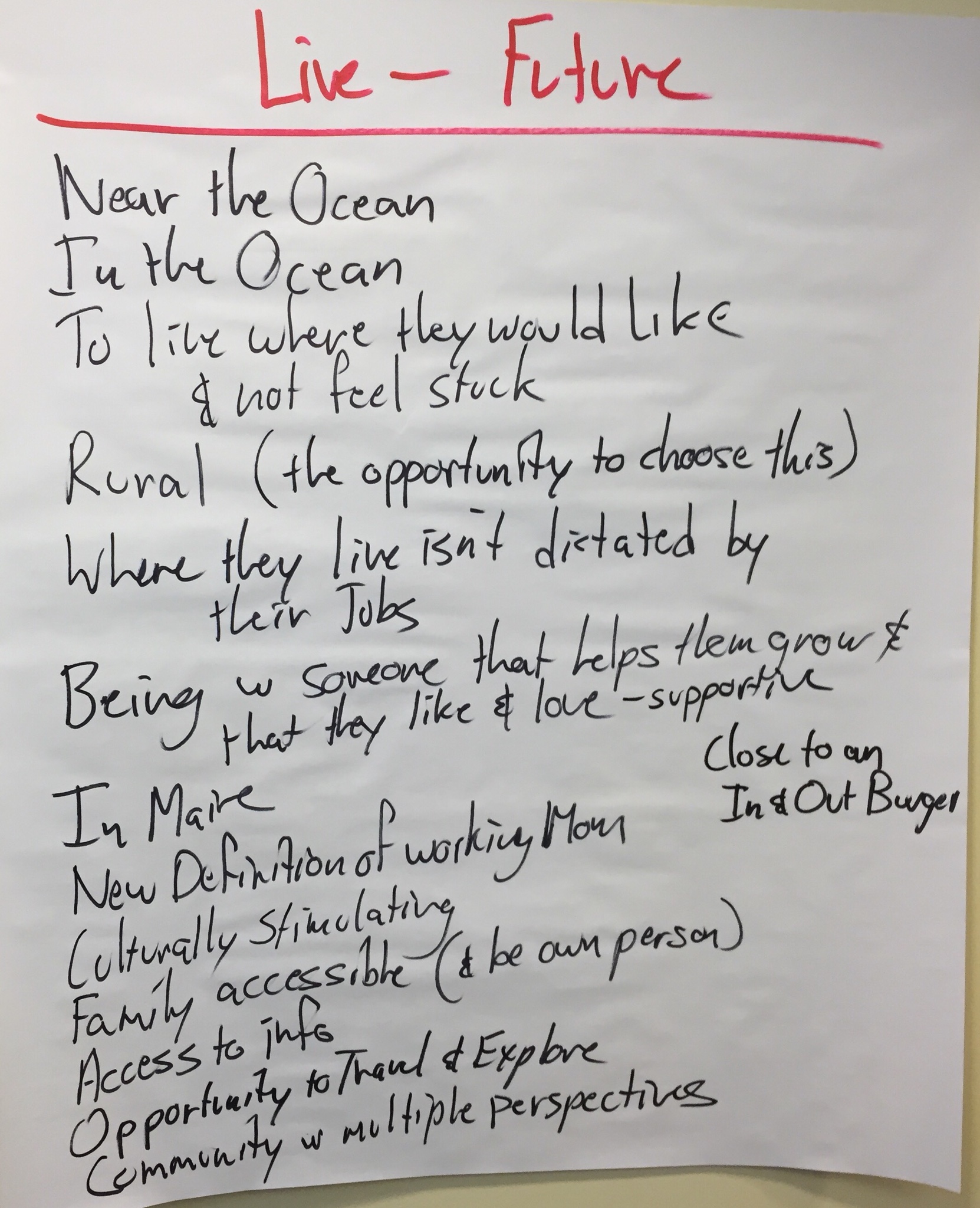
  • Where would we like them to be able to live?
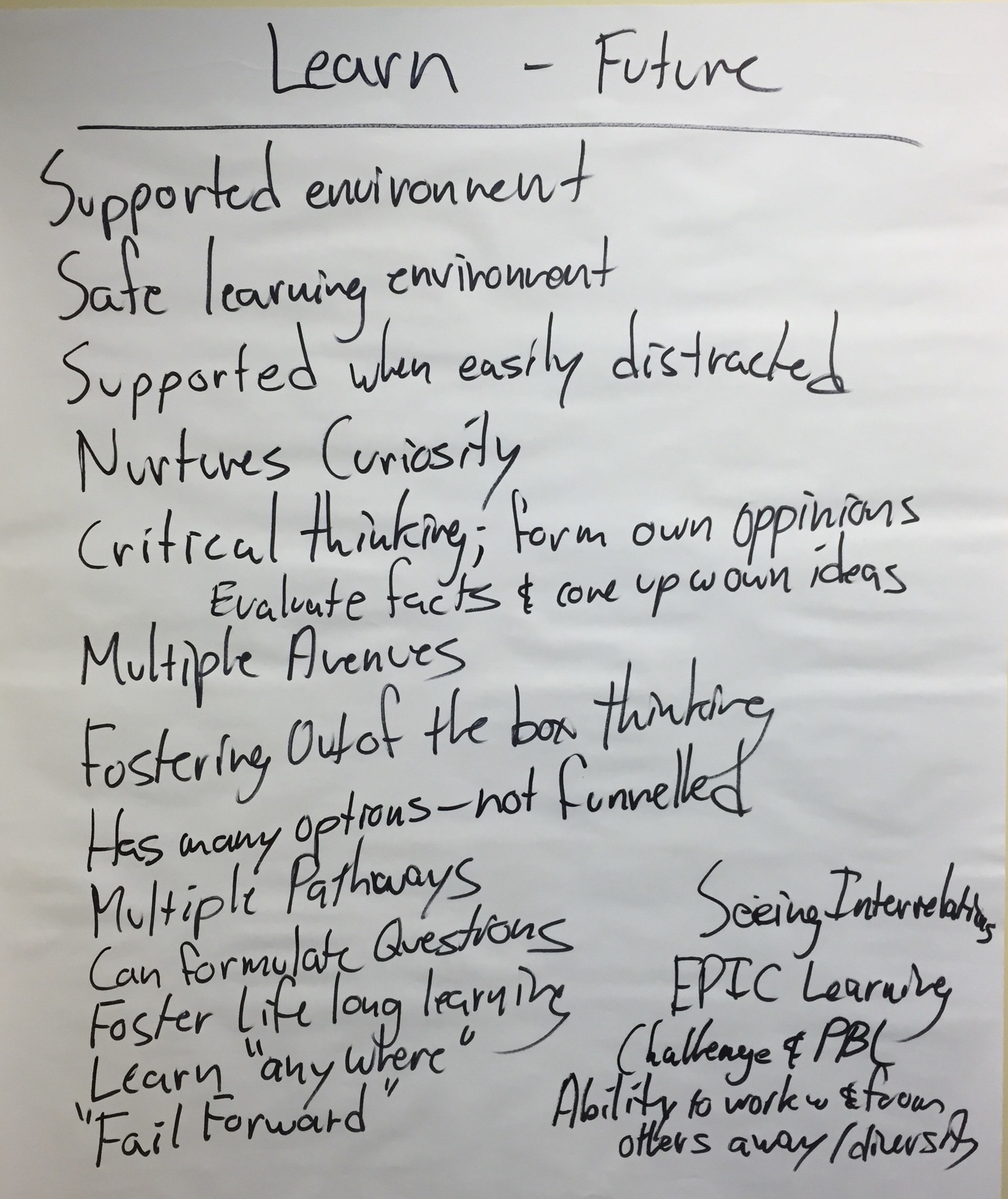
  • Where would we like for them to be able to learn?

Here’s what the team generated:
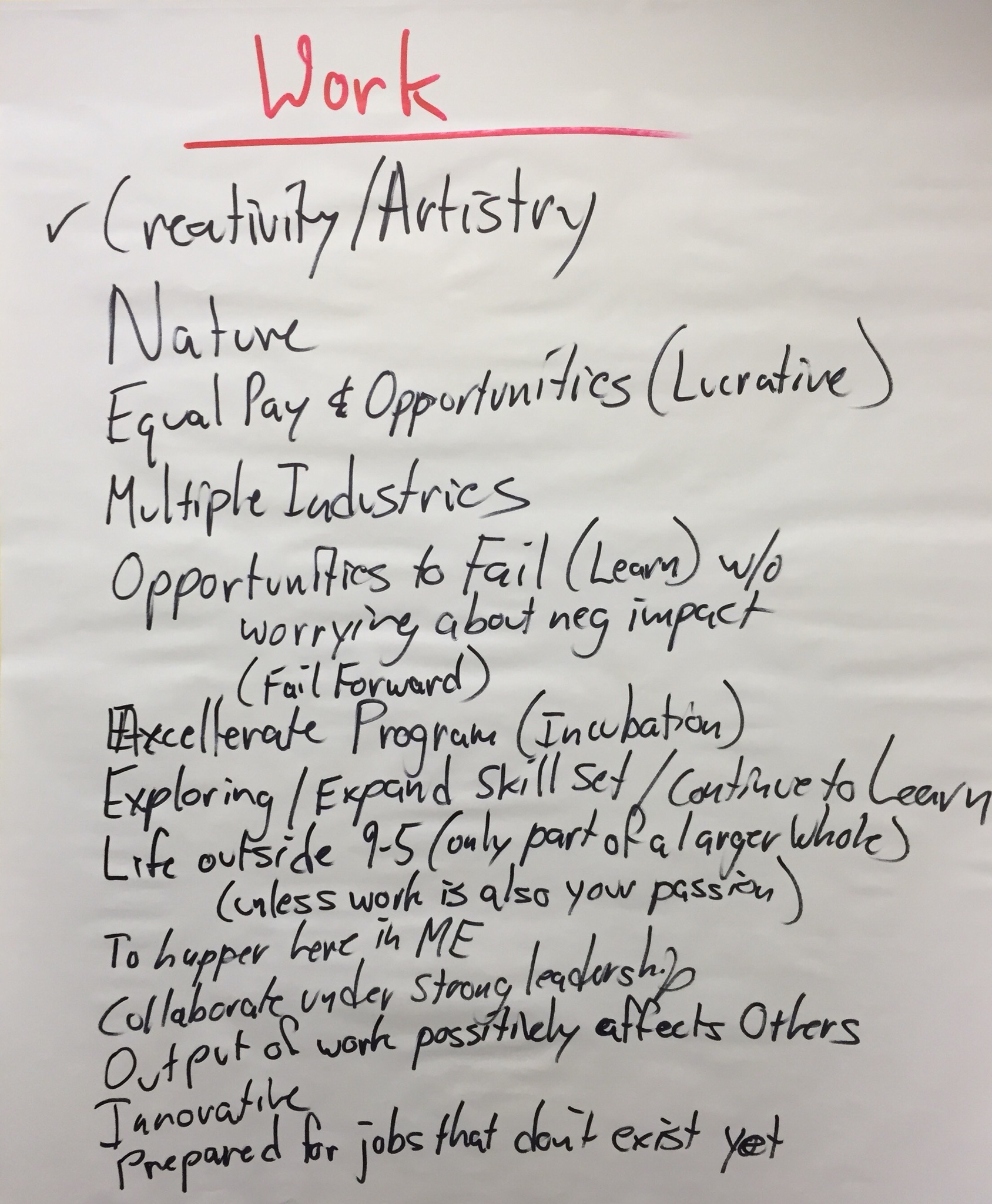
These charts represent the Team’s Preferred Future.

Identifying Our Shared Vision Vision for Learning

The next step was to think about these same students today. If the charts above represent our preferred future for these young people, what do they need to do today to get ready for it?

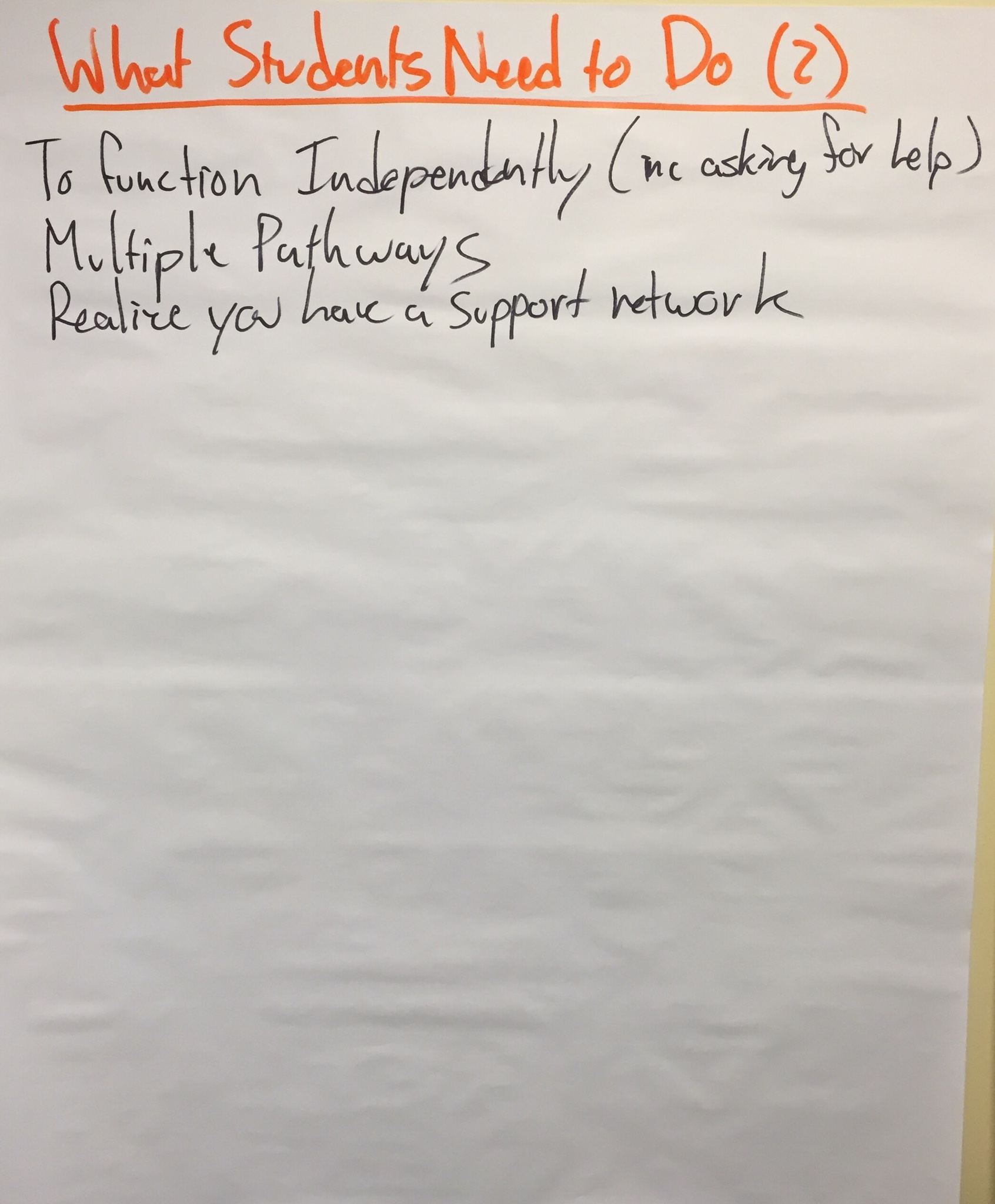
Here is what we generated:
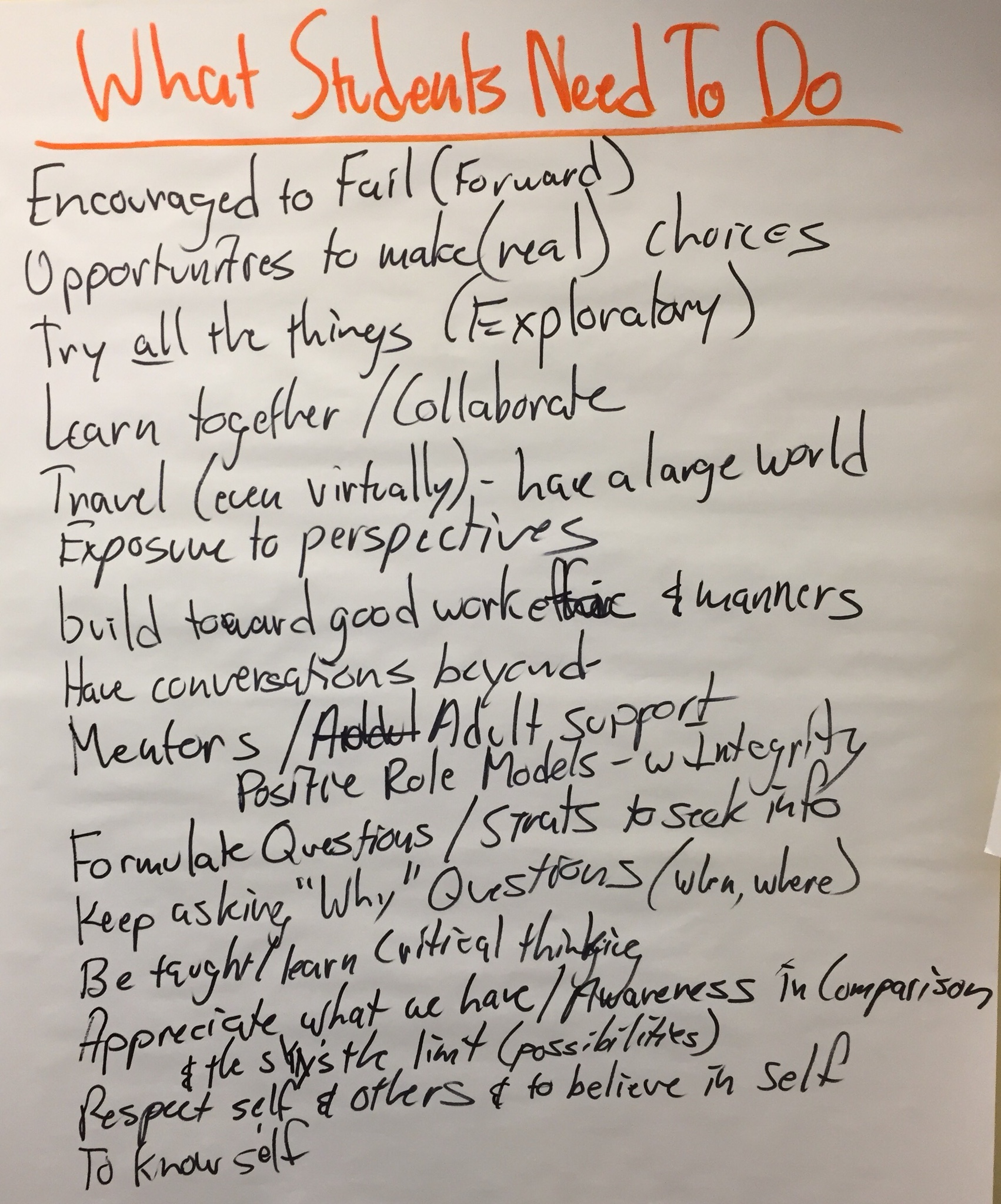
So, these charts represent the Team’s Vision for Learning.

Creating Our Strategic Plan

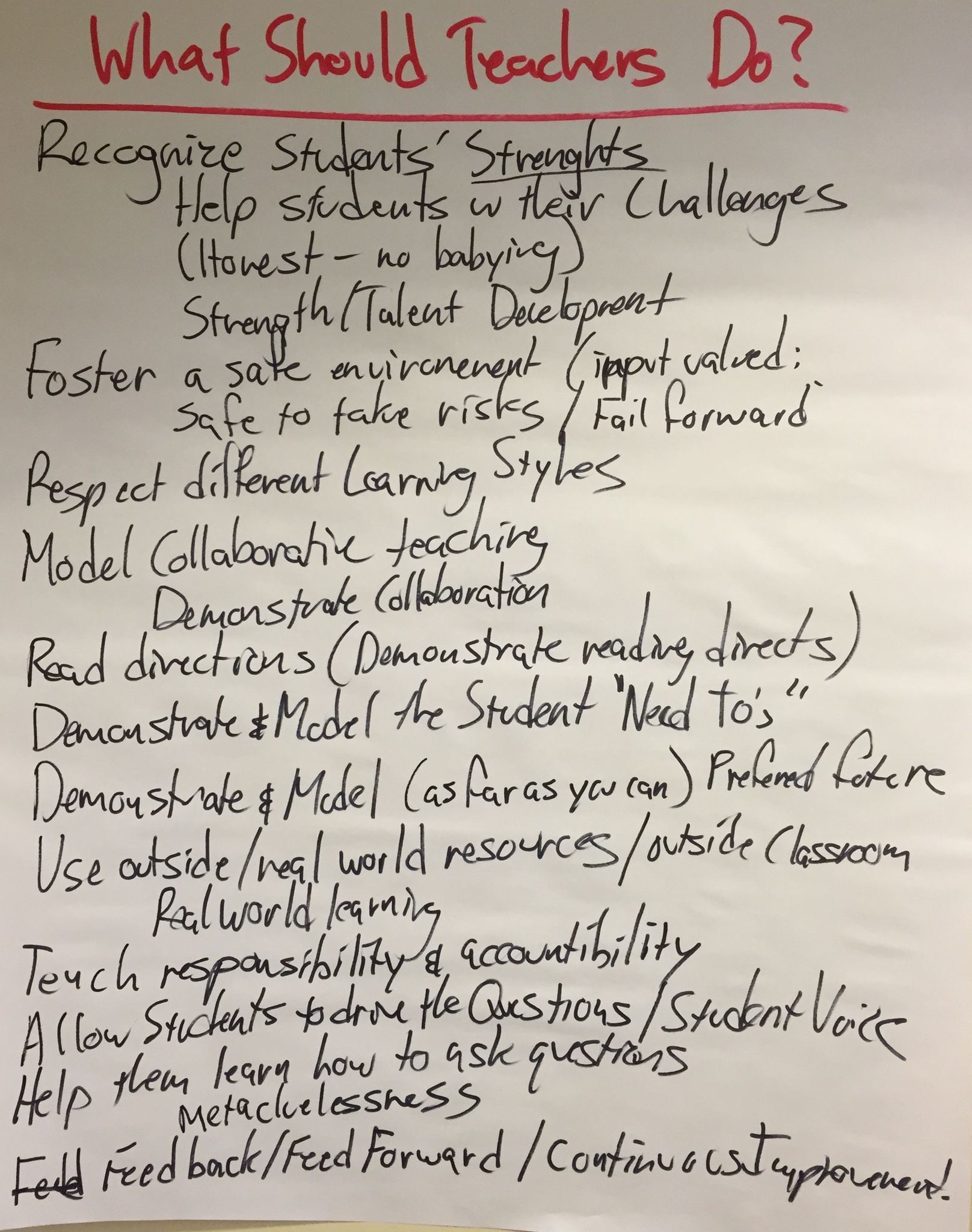
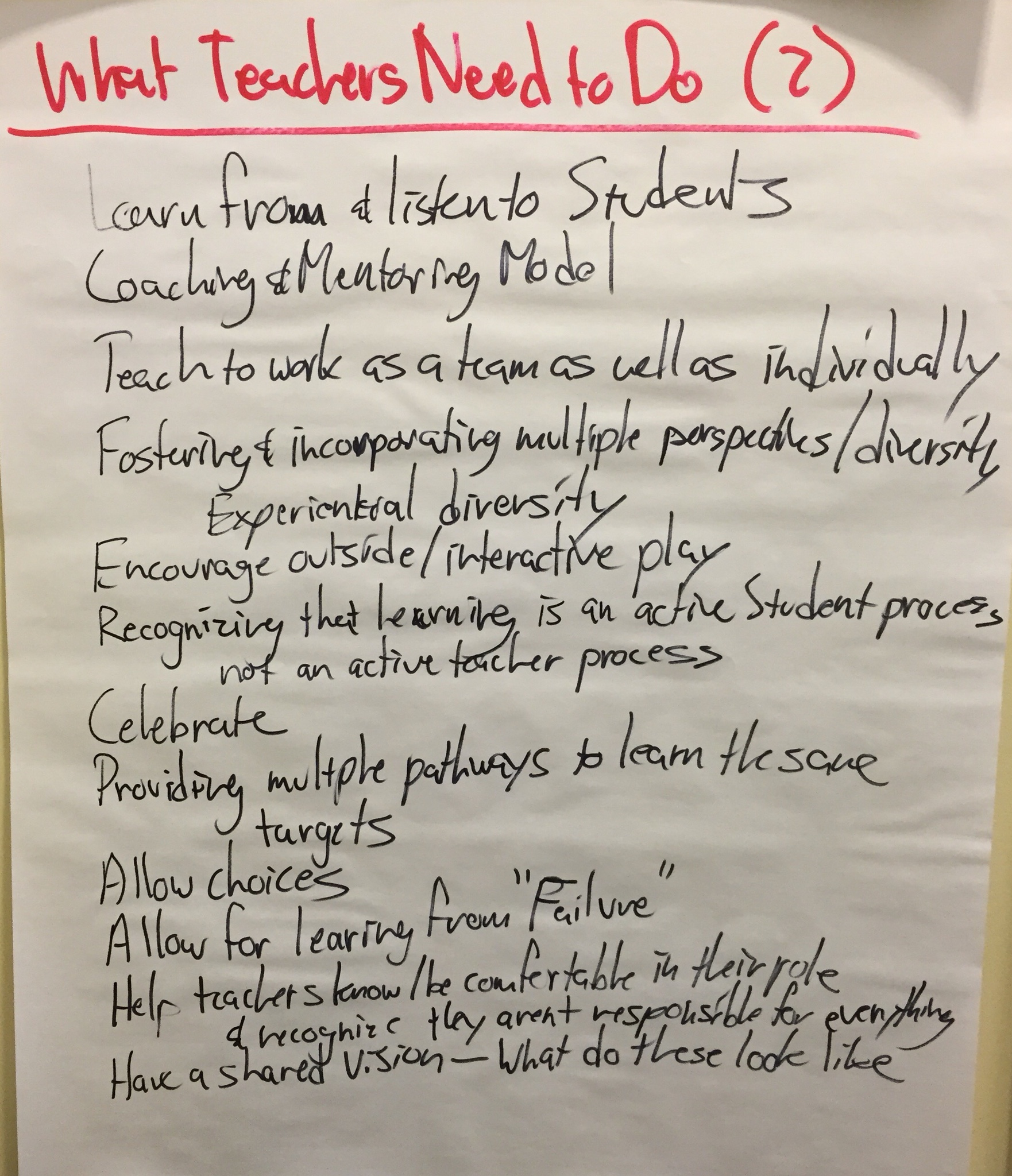
So, if this is what we believe students need to start doing today to get ready for the Preferred Future, what do do we believe teachers need to do, so students can do what they need to? Our thoughts:
And then, what do we believe schools (principals, tech directors, district administration, etc.) need to do so teachers and students can do what they need to? The Team’s lists:
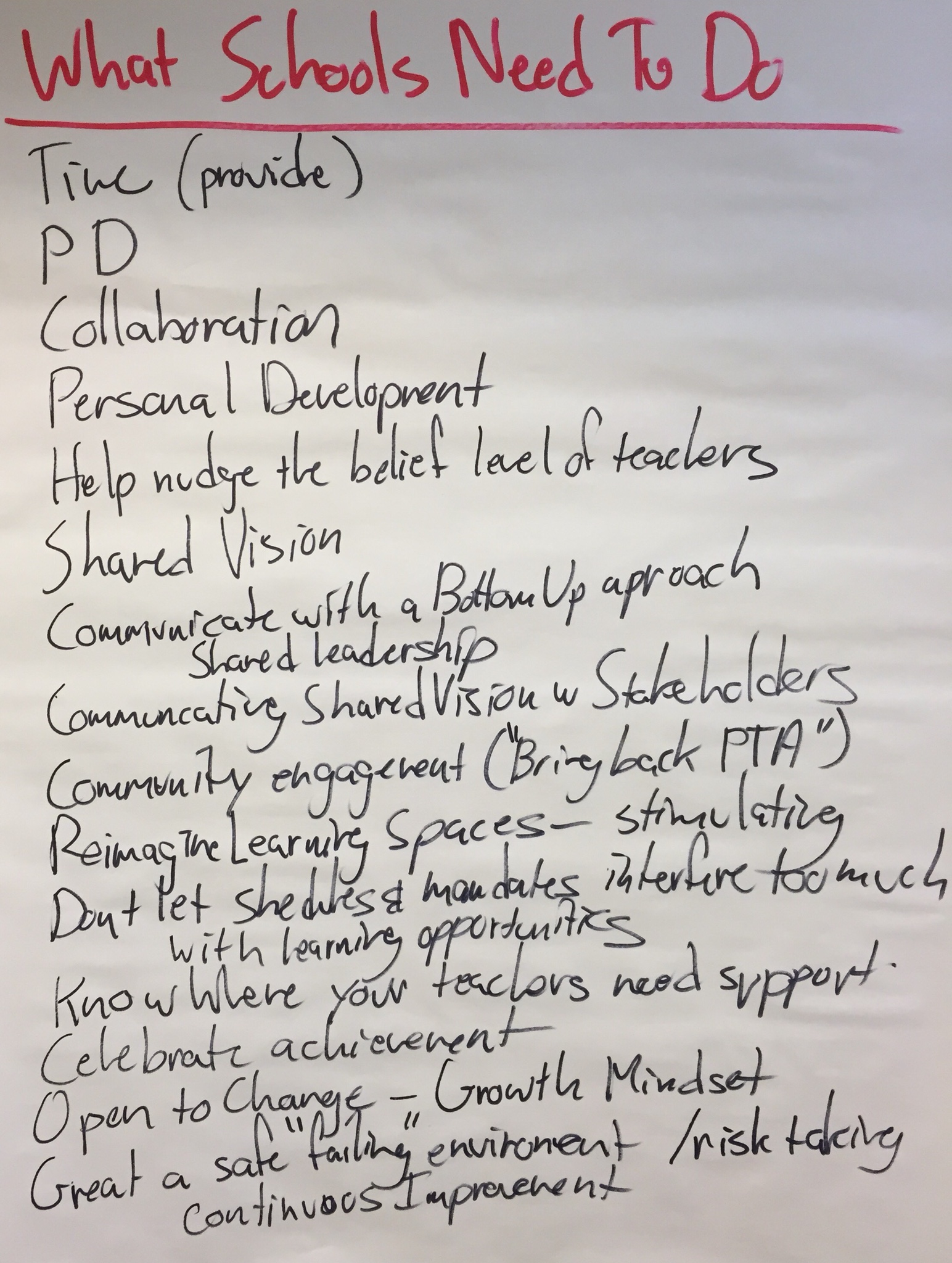
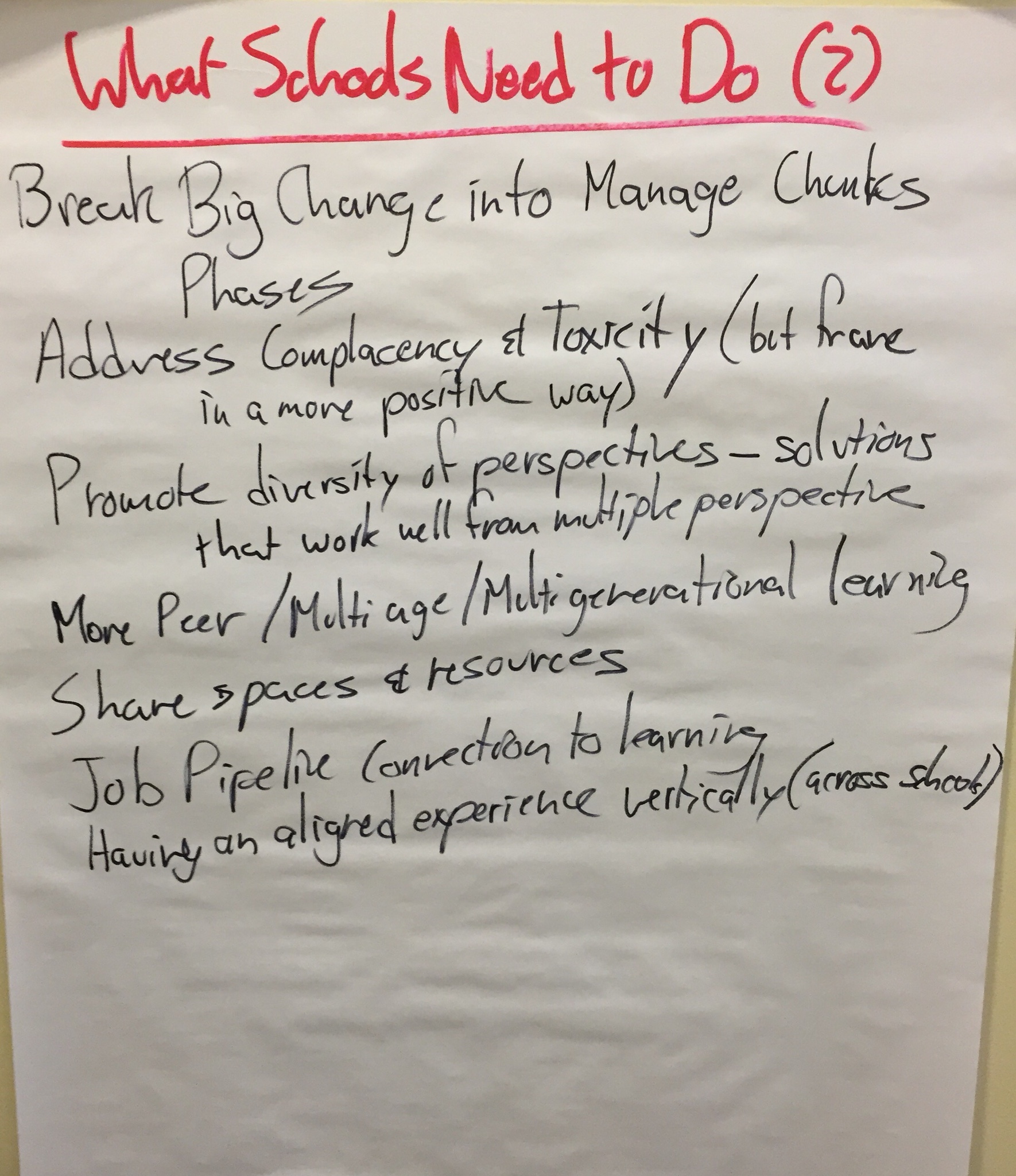
These charts represent what we hope teachers and schools might adopt as their strategic plan.

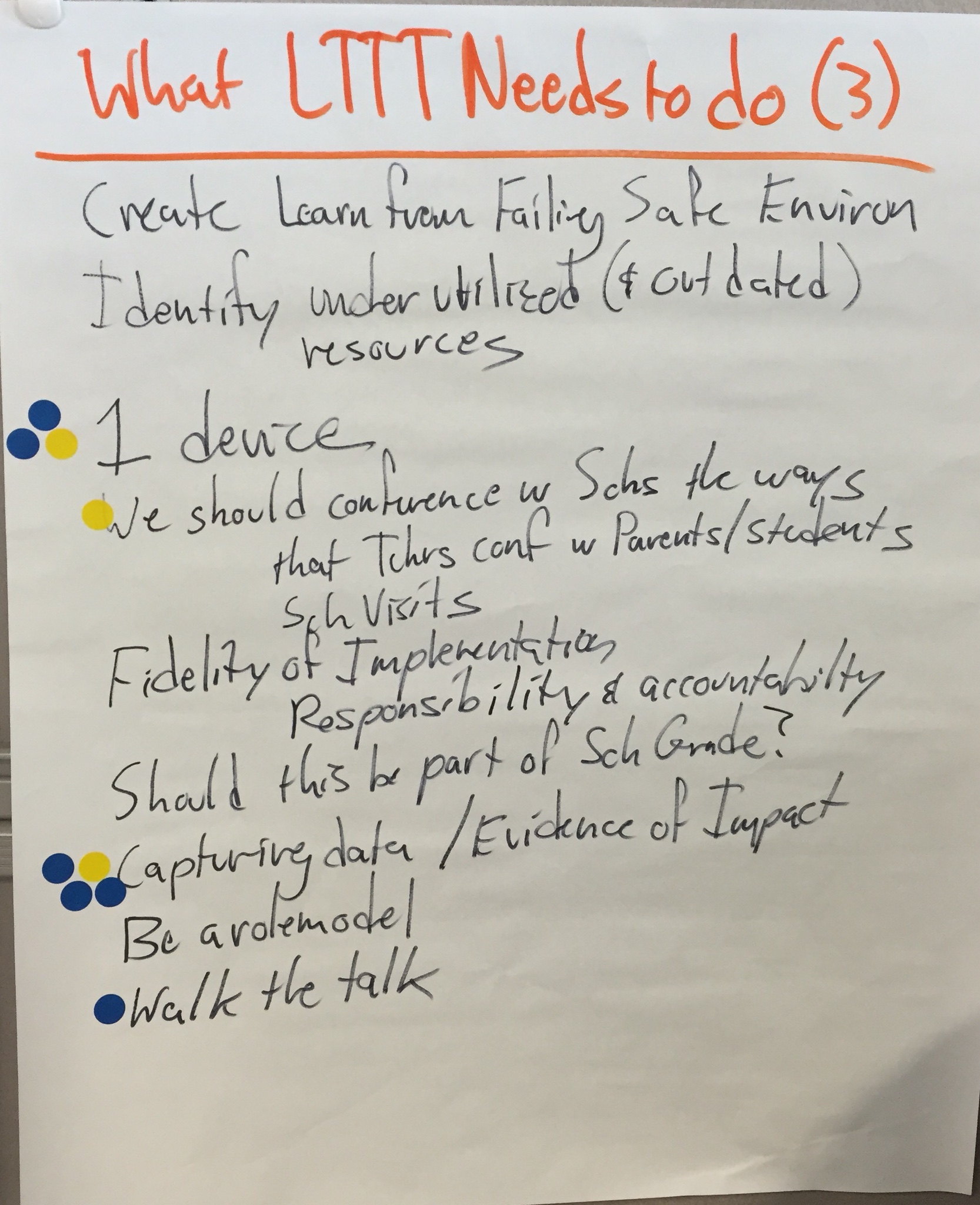
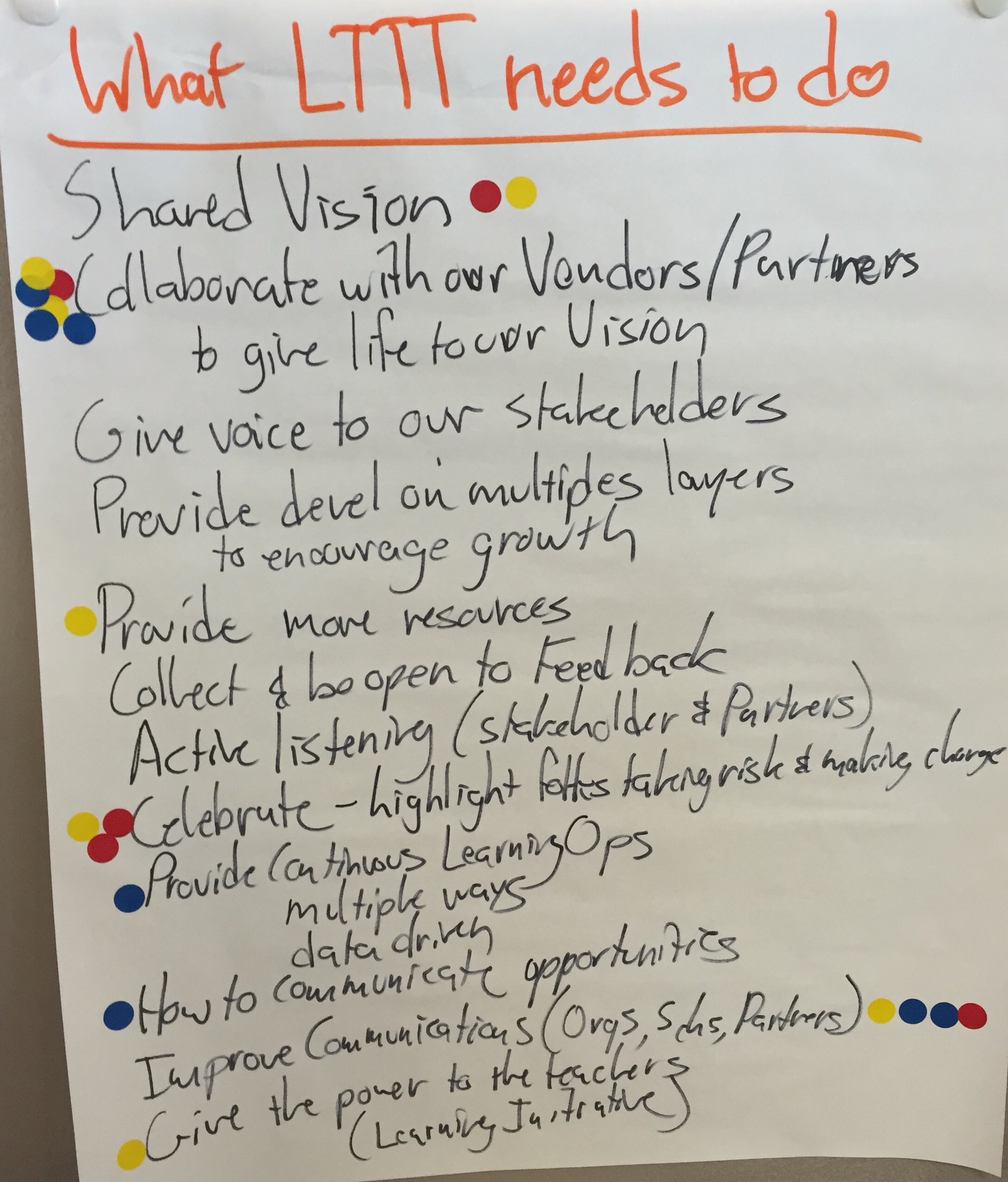
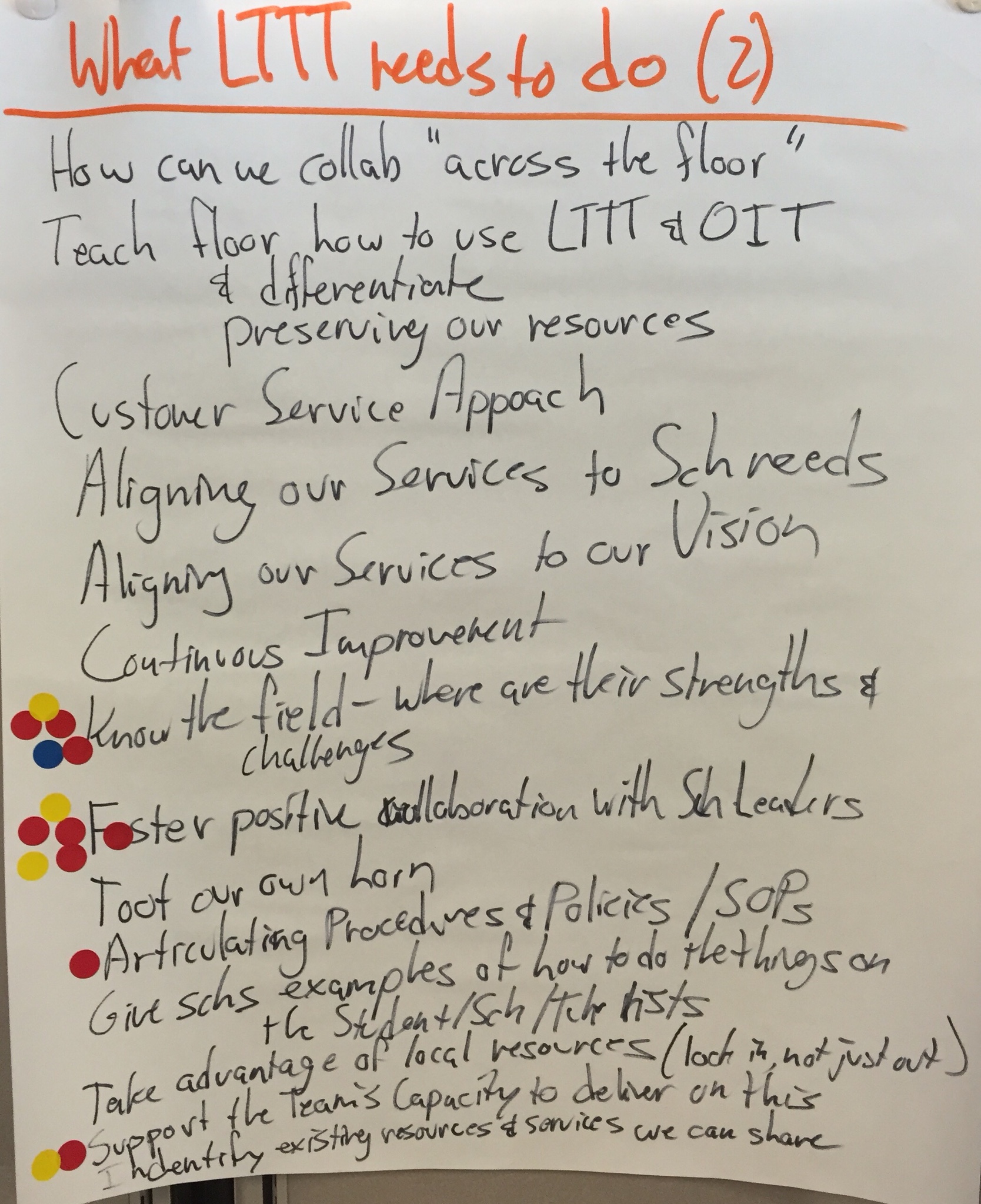
But they also lead us to think about our own work and responsibility for making our Vision for Learning a reality. What does the Learning Through Technology Team need to do to support the work of students, teachers, and schools?
Prioritizing

Accomplishing 3 pages of strategic steps is a daunting task! (Actually, self defeating! We need a little focus!) I gave each Team member 6 dots to place on the charts. The prompt was, “Which are the most important pieces for us to work on right now.” All of them are important, and should be tackled as some time, but we needed to identify where to start. Team members could distribute their dots in an way they wanted (all 6 on one item, or spread out across items, etc.), but they each only had the 6 dots.

You can see where they placed their dots above.

That translates into the following as the Learning Through Technology Team’s Strategic Plan for the coming year:

  • Collaborate with our Vendors/Partners to give life to our Vision
  • Foster Postive Collaboration with School Leaders
  • Know the Field – where are their successes and challenges?
  • Improve Communications (Organizations, Schools, Partners)
  • Capturing data / Evidence of Impact

Where We’ll Go Next

It’s not enough to capture a Vision on paper. It needs to be used as a filter and a compass.

In order to do that, we’ll have to polish our Vision for Learning into a shareable document (it’s a little too rough for sharing in this current form), and create a mission statement. Then we can put together a “Compass and Filter” document (that includes our vision, mission, and strategic plan goals). We will use it to help us decide how to prioritize and do our work, and help us decide which new opportunities to take on. We can also share it with the schools, organizations, and other partners we work with (or might start working with) to see where there is alignment between our work and theirs.

But I’ll save that for future blog posts…

Multiple Pathways Blog: Top 5 Posts From 2013 and the 5 Most Popular Posts

Top 5 Multiple Pathways posts written in 2013:

#5 – The Series on the New MLTI: Choice, Auburn, and Learning – This year, Maine's 13-year-old learning with “laptop” initiative offered schools a choice of devices. This series describes the change in approach to the state initiative, why Auburn chose iPads, and what we still hope to get from our technology, despite the changes.

#4 – The Phases of Implementing Customized Learning: The SeriesOne lesson our district has learned from working with other districts further along with implementing Customized Learning is “not all at once!”

#3 – Life-Long Habits of Mind: Curriculum for Customized Learning – Districts in the Customized Learning Consortium have expanded their curriculum model beyond simply content knowledge. Life-Long Habits of Mind is the third domain of our curriculum model.

#2 – We Need Keyboards With Our iPads. Not! – While some believe that schools should buy keyboards to make iPads useful, lessons from experienced iPad schools suggest the opposite.

#1 – How Does Auburn Select Apps? – Ever since we started Advantage 2014, our primary grades 1to1 iPads initiative, we’ve had educators and parents ask us what apps we’re using.


The 5 Most Popular Multiple Pathways posts in 2013:

#1 – What Makes for Good Learning Experiences?

#2 – 10 Key Components of Customized Learning

#3 – Tone of Voice Matters (In Surprising Ways)

#4 – Motivating Students: Focus on 5 Strategies

#5 – Student Motivation: What Level of Engagement Are Your Students At?


The Series on the New MLTI: Choice, Auburn, and Learning

Maine has long had the first (and, unfortunately, only) 1to1 learning with technology initiative: MLTI.

The MLTI contract was up for renewal this year, and, for the first time, Maine is allowing each district to choose from 5 finalist proposals, producing a lot of conversation about the choices and how to choose.

Below is the series of blog posts I have written about the MLTI renewal, Auburn's choice and choice process, and my interest that MLTI selection focus on learning:


Strengths of the Early MLTI Program – Let’s Keep Them Going

Maine's learning with technology initiative (MLTI) is going through changes this year:

  • The contract renewal framed it not as a Maine contract, but as a multi-state contract, in hopes of making it easier for other states to do their own statewide initiatives.
  • When our governor announced the new contract award, it wasn't for our 12-year partner, Apple, but rather for HP.
  • The governor is allowing districts to select from any of the 5 finalist (Apple is included).

I'm not sure how all these changes will play out. My hope is that Maine's educators will rise to he occasion and take MLTI to the next level. My fear is that this will eventually kill what has been an internationally recognized learning program.

But it has made me think back on MLTI and what we identified that made the early MLTI such a powerful initiative. I found a couple old articles that address that question:

What we identified then as the strengths of this initiative include:

  • Access to technology
  • A focus on learning
  • A focus on leadership
  • Context-embedded professional development
  • Technology as a tool, not a curriculum area
  • Thinking how technology can change/improve teaching and learning

I hope Maine's educators, including the DOE and MLTI staff, continue to place an emphasis on these areas, and, despite the changes to program, MLTI continues to be the strong impactful initiative we had 8-10 years ago.


Is the iPad a Viable Solution for the High School?

As districts are deciding which MLTI solution they would like to choose, there have been a lot of questions asked about if the iPad is a viable solution for high schools.

Note 1: I'm not trying to convince folks to choose iPads, but there have not been the same kinds of questions about viability for the HP laptop or the MacBook Air, so I am simply trying to address the question at hand.

Note 2: For folks outside of Maine, MLTI is primarily focused on 7th & 8th grade (the State pays for those two grades), but districts can buy into MLTI for other grade levels at their own cost, most commonly at the high school level.

Two high schools, recognized for their 1to1 iPad initiatives, would seem to be evidence the iPad is a viable device for high school:


What Did Auburn Choose for MLTI and Why?

Auburn chose the Apple Primary Solution (iPads for students; MacBook Airs and iPad Minis for teachers) for MLTI.

Here is a two-page FAQ document we prepared for our teachers and community. Among other things, it explains our rationale for making this choice.

(Again, we aren't asking anyone to choose what we choose, but rather we're trying to share about our process and how we chose.)


Schools Have MLTI Choice, But Compare the Solutions!

When Maine's Governor announced that he was awarding HP the contract for the Maine Learning Technology Initiative (MLTI), and not to Apple (who had been Maine's partner in MLTI for the last 12 years), he also told schools that they could choose from any of the 5 finalist proposals. Schools had flexibility to decide which solution matched their needs best.

But many of the discussions that have followed seem to have focused almost exclusively on the device (mostly the HP laptop, the MacBook Air, and the iPad). I think because of the focus on devices (and the passion techies have for their devices!), the conversations seem to have bordered on “Platform Wars” at times (with the vim and vigor that all religious wars have!)

But MLTI was never supposed to be about platform, nor the specific device, and not even “job skills.” It was always supposed to be about tools for learning. And I wish schools would discuss learning tools more, and less about device, OS, and job preparedness.

Not even the proposals are about the device. The device (laptop or tablet) is only one component of a whole solution: device, network, software, tech support, projection, professional development, etc. (Supposedly, in support of learning…)

So I'm hoping that schools are looking hard at their school visions for learning, thinking about technology supporting teaching and learning, but also doing a side by side comparison of the solutions as they work to make their decisions.

Any of you who are involved with Customized Learning may have participated in the Complex Reasoning training. In that training, we learned that Decision Making happens effectively when you identify criteria, rate the possible choices against those criteria, and then choose based on the ratings and analysis.

I encourage each of us, as we think about what direction we are going to go, to think not primarily about our preferred OS or device, or “job prep,” but rather about comparing the full solutions:

  • How does the PD compare? (And is it focused on teaching and learning, or on the device and the software? Does it focus on leadership for implementing 1to1 and for school change?)
  • How does the software compare? Is it just productivity tools or is it a good set of software for teaching and learning (including productivity tools)?
  • How much technical support can we expect? Repairs? Imaging? Set up?
  • What about data storage? How much? How easy? What happens after the contract?
  • What about the device? Appropriate for student use? Battery life? Quality of network? How well does their projection solution work, not just for teachers, but for kids?
  • What is the provider's experience with education? (Not simply providing tech, but in helping schools use their tech for teaching and learning – how well do they understand teachers' context?)

Auburn has a good idea of what choice we are selecting, but I'm not arguing that you choose what we choose. I am arguing that you look closely at comparing the 5 solutions against all these criteria. If you and your decision makers do that, and you choose something different that we did, that's great! At least you compared all elements of the solution.

I would just be disappointed if you chose based on “one criterion” (e.g. OS, favorite platform, or “it's the device I use”) or used criteria that don't match the vision and purpose of MLTI (e.g. used “job prep” instead of “learning tool” for your purpose), even if you end up making the same choice we do.

The State has provided a side by side comparison document (available here).

You don't have to use the point scores from the Review.

Do your own rating, but compare the solutions against all those criteria.


Maine Announces State Technology Contract Award – But Not Apple (Kind Of)

We're in the middle of (a contentious) budget season, and I haven't been able to blog as much as I would like lately…

But things took an interesting turn last Saturday, and even though I still really don't have time to blog, I need to get some of this out there…

Saturday, Gov. LePage announced that the MLTI contract would go to HP, not Apple. Apple has been the state's partner in MLTI, Maine's learning with laptop initiative, for the last 12 years.

This was a shock to Maine's educators, because the RFP Evaluation Team had identified 5 finalists and the HP solution had an RFP evaluation rating almost 14 points lower than the top proposal, coming in 4th, and costing almost $20 more per seat than the highest rated solution…

The Governor stated that it was the least expensive solution, but his spokesperson clarified later that he meant to say “least expensive laptop solution.” Also, he made his belief clear that a Windows-based laptop was the best choice for preparing students for work (despite the fact that MLTI is supposed to be a learning initiative, not a job training program).

The really interesting thing, however, is that the Governor also said that districts could choose from any of the 5 finalist proposals, but (for 7th and 8th grade, that the State pays for) would only cover the cost up to what the State would pay for the HP solution. If a school chose a more expensive solution, then they would have to pay the cost difference. (Auburn is likely to choose the iPad solution, the “Apple (Primary)” proposal, which costs less than the HP solution.)

Schools can also buy into MLTI for non-middle grades (high school and elementary school) at their own cost.

There are still lots of questions and lots of concerns, and I'm going to try to blog about some of them over the next day or two…

But in the meantime, here are some resources:


Keep the MLTI RFP Focused on Maine: Talking Points

As with other issues around the new MLTI RFP, I have had good exchanges with folks since I wrote about my worries about the new RFP having an option for other states to buy off of the terms of our contract. Some of you have asked what you might say to the Commissioner, if you wanted to express that you felt similarly.

Based on my experience working both in the private sector and the public sector, and on discussions with business people about this possibility, here are my talking points:

  • The possibility that the price would be lower because the vendor could sell more units is unlikely. A vendor is more likely to give an attractive price to a single showcase initiative.
  • Our RFP should be based on the changes in learning Maine would like to see. This doesn't apply to other states.
  • Even if other states are allowed to buy using our terms, the vendor has to do a separate contract with each state. The legal hassles of this mean that vendors will choose not to submit proposals to Maine.
  • If you take a second to imagine a vendor that you would like to see submit a proposal, there is a very good chance that they will not.
  • Please, make it clear in the RFP that submitted proposals will only apply to Maine.


Keep the MLTI RFP focused on Learning: Talking Points

I have had some great conversations and email exchanges with many of you since posting my concerns about keeping the new MLTI RFP focused on learning. Some of you have asked if you wanted to reach our to the Commissioner to express similar views, what might you say?

Here are my talking points:

  • Instead of tech specs, the RFP should describe what we would like to do with the devices (what is the change in learning that we would like to see?)
  • Technology is expensive, and we should not invest in it if we are simply going to use it to do what we do without it (what is the change in learning that we would like to see?)
  • Looking at the work in Maine, perhaps that change in learning should be Customized Learning and the Education Evolving recommendations
  • In keeping with the components of Customized Learning, the learning activities described should include both those for low level learning and for high level learning.
  • Low level activities (recall, understanding, simple application) could include the following: access to online resources, information gathering, note taking, communicating, studying, accessing online educational tools, etc.
  • High level activities (non-routine application, analysis, evaluation, creating) could include the following: creating simulations, project-based with multimedia, coding and programming, writing for a purpose and audience, digital storytelling, engineering and design, etc.


MLTI: How Will a Multi-state RFP Help Us?

Maine is nearly ready to enter a new contract cycle for the Maine Learning Technology Initiative, and is currently working to craft a new request for proposals from vendors.

The DOE is considering exercising an organizational agreement that would allow other states to buy-in to the terms of our contract.

I recently shared my concerns about this possibility with both Commissioner Bowen and state Tech Director Jeff Mao, and asked them to please consider NOT framing the new MLTI RFP as a multi-state buy-in.

It is generous that the tech director is thinking about how he might help other states by using a provision that would allow other states to essentially access the same agreement that we reach with the successful vendor.

But I’m afraid I don’t see how such an arrangement will benefit us (Maine) and, in fact, I’m worried that it will hurt us. I have worked in both the public sector and the private sector, and although I can see why other states might like the option, I can’t imagine that vendors would.

If part of the motivation is to get a better price by suggesting they’d sell more units (and I admittedly don’t know the reasons the DOE is considering including the option allowing other states to sign on), then I worry that the reasoning is false. I would think that a vendor is more likely to give a better price to a single, well-designed, targeted initiative that had a good chance to showcase their solution.

Also, if our RFP is based on the kinds of changes in learning we’d like to promote (as I advocated in my previous post), it would generate the kinds of proposals that might include very specific software solutions and professional development, as well as hardware and network solutions. These would all be based on Maine’s context, our schools, our learning. How do other states benefit from that? Maybe I could see that if MLTI were simply a tech buy, but we’re not. We’re a learning initiative.

I worry, too, that this arrangement would needlessly make things difficult for a vendor. I would imagine that, even if there is a provision in an agreement between states allowing other states to buy in given our terms, that the vendor would have to still negotiate separate contracts with each state. I don’t think that there is a way for a different state to buy on our terms without having a separate contract with the vendor. And I worry that that which makes things unnecessarily difficulty for a vendor only hurts Maine and the possibilities of our getting a proposal that would include an attractive solution that meets our needs.

And my biggest fear, is that if a multi-state buy-in option is awkward and difficult for vendors, then vendors who could offer us the most attractive solutions will simply choose not to submit a proposal. Frankly, I worry that quality potential applicants will choose not to submit a proposal.

And worse. We can’t even ask our best partner in MLTI what they think. I would imagine that Apple would feel, now that the DOE is working to shape the RFP, that they couldn’t talk to the state about any topic that might even be perceived as related to the RFP. I would imagine that any vendor would think that that was too close to conflict of interest, or even illegal. So a partner that has been very helpful in the past and always quick to collaborate with us on all our challenges is likely to now be a mute partner.

So, if you are also worried about the unintended consequences of including a multi-state buy-in option in the new MLTI RFP, please contact the Commissioner of Education (624-6620; commish.doe@maine.gov) and state Tech Director (624-6634; jeff.mao@maine.gov) to encourage them to frame the RFP around Mane’s needs.

MLTI: What Change in Learning Would You Like to See?

I think one of things that MLTI, the Maine Learning Technology Initiative, did well, right out of the gate, was to say it isn't a “tech buy,” but rather a learning initiative. I think this one point is a major reason why the first (and still only) statewide learning with laptop initiative did so well and is more than a decade old. Even the first RFP to prospective vendors focused on what we wanted to do with the technology, rather than tech specs.

And the focus on learning was especially evident in our professional development.

Our PD focused on project-based learning, and the writing process, and mathematical problem solving, etc. We focused on how to teach with technology, not so much on how to use it. And when we did focus on how to use it, it was in the context of how to teach with that tool. We didn't do workshops on how to use a spreadsheet; we did workshops on how to analyze data and the participants left also knowing how to do spreadsheets.

But I've grown concerned that MLTI may be moving away from that focus on learning. To listen to conversations about the initiative, they seem to focus much more on the “stuff” (comparing devices, network and filtering solutions, and discussing software fixes and specifications…) than on teaching and learning. I am not saying that I've heard that from Jeff Mao, Maine's Tech Director, or the DOE, as much from out in the general public. But even so, it has me worried a little…

I think one of the tricks of keeping a mature initiative going is to reflect on what made it great in the first place, and make sure that we keep those pieces fresh, even if they may have gotten a little stale and need refreshing. That's not to say that the MLTI team isn't doing their job. Every initiative needs freshening up when things have been routine for a while!

Right now, the MLTI contract is getting ready to run out and the Department of Education is working to craft a new RFP. What better (and perhaps more appropriate!) time to freshen up an initiative than when designing that initiative's RFP.

So I recently had conversations with both Commissioner of Education Bowen and Jeff Mao, asking them to please consider framing the new MLTI RFP around the change in learning they would like to see in our classrooms. This post reflects some of what I shared with them, first in my phone conversations, and then in a follow up email.

So, I'm hoping that MLTI is still committed to being a “learning initiative” and not a “tech buy.” And if it is, I'm hoping that the RFP can be crafted in such a way that this is evident.

And if so, then what is the change in learning that the Commissioner and the MLTI team are hoping will come about by leveraging the technology? Is it Customized Learning? What would Education Evolving, Maine's new education strategic plan, look like in action and how could technology help bring about? Is it the practices highlighted in the DOE's new Center for Best Practices? What are we hoping students would be doing each day, both on and off their devices, that we would recognize is a change in learning?

Or as I say in presentations, if we're just going to use technology to do what we're already doing, why put the money into technology?

I'm hoping that the Commisioner and the MLTI team will consider framing the RFP in such a way as to make obvious that we are looking for a change in learning, and allow the responding vendors to propose the technical solutions that they think can help get us there.

So, if you think that MLTI should be more than a tech buy, please contact the Commissioner of Education (624-6620; commish.doe@maine.gov) and state Tech Director (624-6634; jeff.mao@maine.gov) to encourage them to frame the RFP around desired changes in learning.